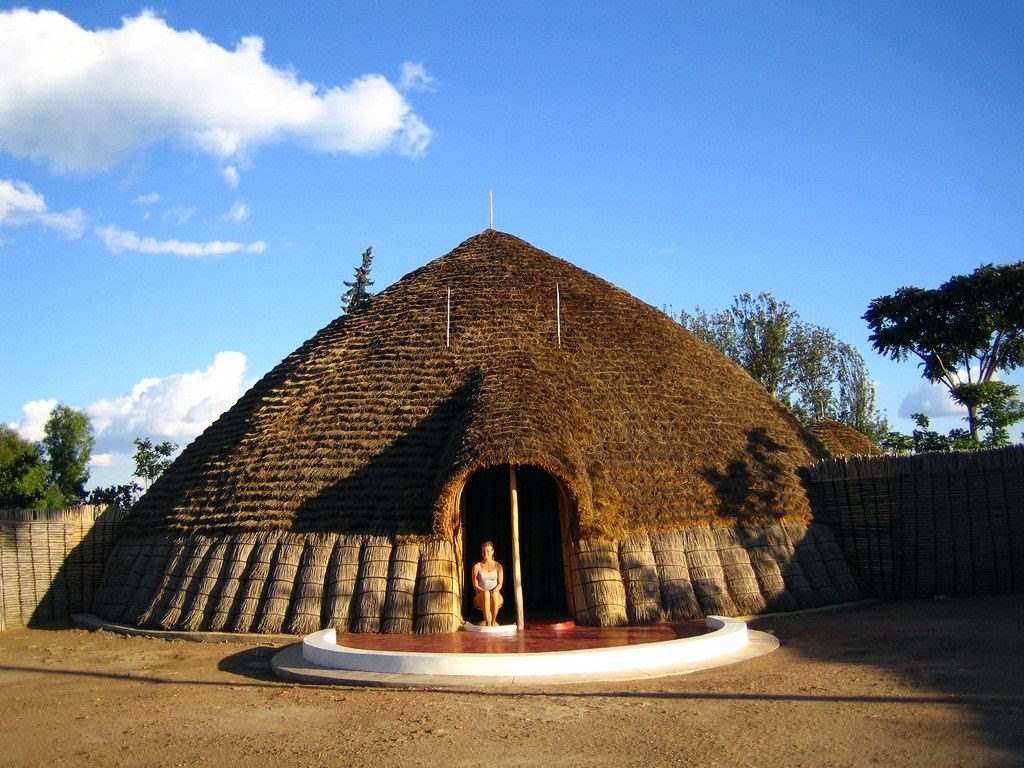
Did you know that Kings Palace Rwanda lets you walk the grounds where Rwanda’s kings once ruled and also see royal drums, spears, and thrones up close just as the Mwami kings did?
Explore with Naicef Kings Palace Museum, Rwanda today and discover a reconstructed traditional royal beehive palace alongside a 1930s Art Deco home and the world-famous Inyambo cattle enclosure.
Providing unforgettable experiences from interactive storytelling and royal artefact viewing to witnessing the famous Inyambo parades performed by keepers singing traditional lullabies.
Kings Palace Nyanza Museum is a protected cultural monument and symbolizes Rwanda’s commitment to its heritage and legacy as a royal monarchy.
This guide will take you through the amazing Rwanda Royal Palace history, which describes the heart of royal Rwanda and the Kings Palace Rwanda museum entrance fee, which has been lovingly recreated through meticulous reconstruction.
The location of Kings Palace Nyanza Museum in the Southern Province, within the Nyanza District near Huye, makes it an ideal and a ‘must-visit’ cultural stop for travelers.
If you are wondering which is the best tour company to visit the Kings Palace Museum Rwanda, Naicef stands out for curated cultural experiences and personalized Rwanda heritage tours.
Contact Naicef at +254799922277 or email my@naicef.com to begin your Kings Palace Museum Nyanza adventure today.
Book The Tour Here
What are the Interesting Facts about Kings Palace Rwanda Museum?
Kings Palace Museum, Rwanda, is one of the top-rated cultural heritage sites in Rwanda, recognized as a living museum, promoting the revival of Rwanda’s royal culture.
This museum uniquely offers a blend of traditional palace, colonial-era Art Deco palace, and the modern-day Inyambo cattle traditions in an idyllic, historically authentic setting.
Here are some of the most interesting facts about the museum:
1. Houses real royal regalia and living demonstrations
Visitors get to experience pre-colonial-era artefacts such as the royal drum replicas, royal shields, spears, royal baskets, stools, and thrones, as well as colonial-era artefacts in the Art Deco palace.
Creating a treasure trove for anyone interested in royal culture, governance, and royal symbolism.
2. The site is compact yet multi-layered
This museum has three main sections: the traditional palace, the Art Deco palace, and the cattle traditions, ensuring visitors get to experience centuries of history in just one visit.
3. Built on original royal grounds
Kings Palace Nyanza is located in the historic heart of the old kingdom, forming part of the southern cultural corridor, which links the Ethnographic Museum in Huye.
4. Features daily living royal traditions
The museum features Inyambo cattle parades with cattle owners dressed in traditional clothing singing lullabies and performing cattle grooming traditions, as well as occasional Intore warrior dance performances.
5. Serves as Rwanda’s primary royal heritage museum
The post-independence abandonment of the site was followed by its reconstruction using traditional materials, transforming it into a world-class educational facility that attracts thousands of visitors annually.
6. Represents one of Africa’s strongest cultural revival successes
The collaborative efforts of the government, historians, and community have transformed the palace from its state of ruin in the 1990s into a flagship heritage site that proudly celebrates its monarchical past.
Did you know that the restoration of Kings Palace Museum Rwanda not only brought royal history back to life but also offered gainful employment as its living history is guarded by its guides, keepers, artisans, and performers?
Interestingly, did you also know that in Kenya, there is a place where there is a kingdom that is still functional and has a king? This is none other than Nabongo Mumia Cultural Centre.
Learn more about the place and even check it out in our amazing tour below, among other cultural experiences:
- 3 Days Western Kenya Cultural Tour Package
- 4 Days Western Kenya Wildlife Safari
- 3 Days 2 Nights Aberdares Cultural Tour
- 3 Days Samburu Cultural Tour
What is the Rwanda Royal Palace History?
The history of Kings Palace Museum Rwanda chronicles the rise, fall, revival, and resurgence of the monarchy in Rwanda.
Nyanza has been the royal capital since the 15th century for successive Mwami kings like Yuhi V Musinga and Mutara III Rudahigwa.
The original palace was a thriving hub of activity with advisors, poets, warriors, dancers, and Inyambo cattle that represented wealth, divine right to rule, and national unity.
Colonial rule by the Belgians in the late 19th century saw a decline in the palace’s significance, culminating in the construction of a modern Art Deco palace in the 1930s for King Mutara III that fused European style with Rwandan flair.
After independence in 1962, the monarchy was dissolved in the midst of political turmoil. The palace grounds remained in disarray with the royal paraphernalia scattered or lost by the 1990s.
Revival efforts began in the late 1990s with the Rwanda Museums Program.
Materials like grass, reeds, and poles were used to rebuild the beehive palace with great accuracy. The Art Deco palace was restored, and Inyambo cattle bloodlines were revived.
By 2001, key artefacts had returned, and in 2004, the site officially opened as Kings Palace Museum Nyanza.
Today, the museum symbolizes Rwanda’s cultural confidence, with ongoing oral history collection, artefacts digitization, and regular Inyambo parades ensuring the royal legacy remains vibrant and accessible for generations.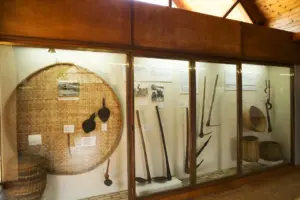
Where is Kings Palace Nyanza Location?
Kings Palace Museum Rwanda is found in the historic town of Nyanza, southern Rwanda, thus making it an excellent place for those interested in exploring the heritage heartland of Rwanda.
Kings Palace Museum Rwanda is found in the Southern Province, in the Nyanza District, in a quiet and scenic plateau region, unlike the dramatic scenery found in the north, which has mountains, and the east, which has savannah grasslands.
It is approximately 88-150 km (55-93 miles) south of Kigali, and the journey takes 2-3 hours via excellent paved roads through terraced hillsides, tea plantations, banana plantations, and picturesque villages, providing beautiful views of rural Rwanda.
The museum features the main traditional beehive palace, the adjacent Art Deco residence, and the rear Inyambo enclosure, which are connected via peaceful walkways.
At 1,500 meters, the weather is mild and pleasant, with light mists at times. Due to the southern location, the weather is warm and dry compared to the north, thus having lush gardens surrounding the museum.
This makes it an excellent place for those interested in quiet, contemplative cultural explorations, an alternative experience from the wildlife safaris, and 30 minutes away from Huye, making it easy to visit the Ethnographic Museum.
What Activities Can You Do at Kings Palace Museum Rwanda?
Activities at Kings Palace Museum Rwanda are varied and immersive, with guided tours as the core experience, but many other meaningful ways to engage with the site’s rich heritage.
Here are the main things to do:
1. Take a guided palace tour (1–2 hours)
Expert guides lead you through both the traditional beehive palace and the Art Deco residence, explaining architecture, royal symbolism, court life, and artefact stories in English, French, or Kinyarwanda.
Check out also some of the amazing tours that we offer across historical places:
- Historical Places In Kenya ~ Unravelling The Echoes of Ancient Roots
- Tourist Attractions, Things To Do & Best Places To Visit In Lamu County
- 3 Days Beach Vacation in Kenya
- Mind-Blowing Guide To Stone Town Zanzibar Tanzania
- Best Guide To Kilwa Kisiwani Ruins And Ruins of Songo Mnara
2. Watch Inyambo cow parades and keeper performances
Observe the sacred cattle up close during scheduled sessions where keepers sing traditional songs, demonstrate grooming, and explain the cows’ historical and spiritual role.
3. Participate in cultural demonstrations
Join nearby artisan cooperatives for hands-on basket-weaving, pottery, or storytelling sessions that share oral histories and royal-inspired crafts.
4. Enjoy Intore dance or drumming shows
Witness the graceful warrior dance or hear royal drum rhythms that once announced the king’s presence. 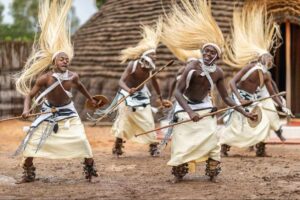
5. Photograph and reflect in the gardens
Capture the palace architecture, cattle, and peaceful grounds, or simply sit and absorb the historical atmosphere.
All activities emphasize respectful engagement and directly support local guides, keepers, and artisans.
What are the Kings Palace Museum Rwanda Opening and Closing Hours?
Kings Palace Museum Rwanda opens daily from 8:00 AM to 6:00 PM, giving visitors a full window to explore.
Guided tours run continuously during these hours and last 1–1.5 hours.
On the last Saturday of each month (Umuganda community workday), opening is delayed until midday. The museum closes entirely on April 7 (Genocide Memorial Day) and during the national mourning week in April.
Special cultural events or parades may occasionally extend slightly into early evening, but plan to finish by the official closing.
Always verify current hours when booking, especially during holidays.
What is the Kings Palace Nyanza Museum Entrance Fee?
The King Palace Museum Entrance fees are affordable and support preservation, and are as follows:
- International adults: 10,000 RWF ($7 USD)
- Children/students: half price
- Rwandans & EAC residents: Approx. 6,000 RWF
- Inyambo Parade supplement: 3,000 RWF adults / 1,000 RWF children
- Student groups (20+): 500 RWF per person
- Multi-museum pass (3 months): 10,000–15,000 RWF for internationals
Guided tours are included in the base ticket.
Payment accepted in cash, mobile money, or online via Irembo. All revenue goes toward maintenance, artefact care, and community programs.
What is the Pre-Colonial Rwanda?
Pre-colonial Rwanda was a highly advanced, centralized, and organized kingdom.
It was a centralized and organized kingdom, and it was ruled by a powerful and advanced monarchy.
The kingdom had originated from the legendary founder King Gihanga in the 11th century.
However, the kingdom reached its peak in terms of size and culture between the 15th and 19th centuries under a series of Mwami (kings) who ruled from the capital at Nyanza.
The society was organized into a complex clan structure and a fluid social hierarchy comprising Tutsi pastoralists (cattle owners), Hutu agriculturalists, and Twa hunter-gatherers.
The people were united by a highly advanced patronage system known as ubuhake, whereby cattle were presented in return for loyalty, protection, and labor.
The people practiced a highly advanced agriculture in the hilly terrain, iron smelting, pottery, and basket weaving.
Mass cattle rearing with the Inyambo long-horned cows represented the ultimate symbol of wealth and divine kingship.
Kings such as Kigeli IV Rwabugiri, who expanded the kingdom through conquest, and Yuhi V Musinga exercised absolute power with the assistance of a council of elders and spiritual leaders.
The daily life at the palace in Nyanza was full of vibrancy, with poets reciting epic poems and the Intore warriors performing elegant dances with their spears.
The royal drummers beat the sacred royal drum, the Kalinga, to announce the king’s pronouncements, and the spirit mediums consulted the ancestors for guidance.
The ceremonies with the sacred fire, milk libations, and cattle processions reinforced the king as the political and spiritual leader and intermediary between the living and the divine.
This period emphasized the values of unity (ubumwe), respect for hierarchy, hardiness, and harmony with nature, which were later disrupted by colonialism and have been impressively revived and re-enacted through the various reconstructions and displays of the artefacts at the site.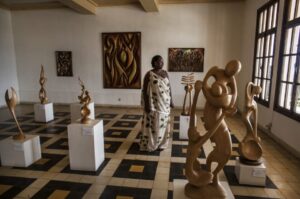
When is the Best Time to Visit Kings Palace Nyanza Museum?
The best time to visit Kings Palace Nyanza Museum is when the weather is most pleasant for walking around, exploring outdoor exhibits, and enjoying cattle parades and cultural performances.
- Dry Season – (Mid‑December to February & June to September)
These months have clear skies, minimal rain, and comfortable temperatures, making it ideal for visiting the palace grounds, taking guided tours, and photographing exhibits.
- June–September
A long dry season is excellent for outdoor conditions and scenic countryside views.
- Rainy Seasons – (March–May)
Long rains and heavier rainfall can make walking and driving wet and muddy.
- October–November
Short rains or occasional showers may interrupt outdoor activities.
What is the Traditional Architecture of Rwanda?
The traditional Rwandese architecture, as beautifully maintained at the King’s Palace Museum, depicts harmony with the environment, cultural meaning, and ingenuity.
The renowned beehive-shaped palace of the king (Ibwami) was constructed using local materials like elephant grass, reeds, wood poles, and clay without the use of nails or iron.
The structure features a perfectly symmetrical dome that provides a cool interior space in Rwanda’s climate.
The palace was designed with different sections for the king, queen mother, sacred relics, meetings with courtiers, and enclosures for the revered Inyambo cattle.
The woven patterns represented protection, fertility, and kingship, whereas the circular shape represented unity with the concept of life.
The ordinary people’s houses were designed with similar ingenuity on a smaller scale. The materials used included clay and cow dung for waterproofing.
The houses were constructed with the help of the entire community. Such architecture depicts the high sense of unity in the Rwandese society.
Though colonial influence brought bricks and iron sheets for buildings, the museum beautifully depicts the original style of construction.
Does Kings Palace Museum Rwanda Have Inyambo Cows?
Yes, the Kings Palace Museum Rwanda is known for its Inyambo cows, which are one of the most powerful and photographed exhibits within the museum.
The museum has a herd of 10 to 20 long-horned Ankole cattle, which are known as the Inyambo, kept within a special enclosure directly behind the traditional palace.
They are the real deal, the actual descendants of the royal herds that roamed the area in the 1950s, reintroduced to the museum in 2011 after selective breeding by the Rwanda Agriculture Board.
Their numbers are kept strong with expert care, traditional feeding, and protective conservation that preserves their historical importance.
The Inyambo cows are easily identified by their beautiful, wide-spreading lyre-shaped horns and graceful appearance, which represent symbols of royal wealth, power, and divine favor.
They are frequently observed grazing peacefully or being led in processions around the museum, with their keepers, dressed in traditional white cloth, singing traditional lullabies and engaging in traditional grooming rituals that have been around for centuries.
This provides an emotional connection to the exhibit, which might otherwise be just a viewing experience, but instead becomes a powerful experience with the history of the royalty in Rwanda.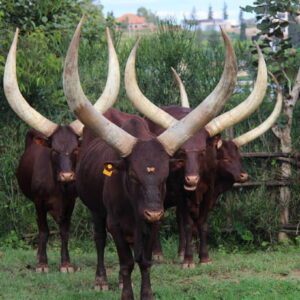
What are Rwanda Royal Traditions?
Rwanda royal traditions are an essential part of ceremonies, symbols, and artworks that helped increase the spiritual and political powers of monarchies, according to the Kings Palace Museum exhibit.
At the center of these traditions is the sacred drum Kalinga, said to embody the spirit of the nation, where drumbeats signified royal events, victories, and times of mourning, and where its loss equated national tragedy.
The Mwami coronation is a royal ceremony where the monarch is crowned and involves royal regalia such as spears, shields, and milk containers, sacred blessings from elders and spiritual mediums, libations, cattle sacrifices, and celebrations.
It involves sacred processions of the Inyambo cattle, representing national wealth and divine blessings, where they are paraded daily with songs and ceremonies.
The royal court activities include the elegant warrior dance, Intore, royal poetry recitals of lineage history, elder councils, and seasonal celebrations that unite the nation.
While the monarchy was dissolved in 1962, these traditions are now preserved through performances, cattle parades, drumming, and storytelling at the museum.
Visitors can experience the unity, dignity, and richness of Rwanda’s former kingdom, which lasted centuries.
What are the Cultural Sites in Rwanda?
Rwanda has a carefully connected series of cultural heritage sites, and together, they create a rich story of monarchy, tradition, resilience, and modern creativity.
At the heart of this cultural story is the Kings Palace Rwanda Museum, which is the most significant royal cultural heritage site in Rwanda.
Nevertheless, in order to appreciate the rich cultural heritage and identity of Rwanda in depth, there are a number of alternative sites that can be visited.
Here are some of the must-visit cultural sites in Rwanda:
1. King’s Palace Museum – The Royal Foundation
This is the most significant royal cultural heritage site in Rwanda, and this is where the story of the pre-colonial monarchy can be found.
The traditional beehive palace, also known as Ibwami, is a magnificent example of indigenous architectural skill, while the Art Deco-style house is a reflection of the transition period from the indigenous to the colonial era.
The living Inyambo cattle, the layout of the royal court, and the symbolism of the palace are also found at this museum.
2. Ethnographic Museum – Everyday Life and Cultural Context
This museum is located just 30 minutes away from Nyanza and boasts one of the largest collections of ethnographic material in all of East Africa, with more than 100,000 artefacts on display.
It offers visitors a glimpse into the traditional processes of ironworking, agriculture, pottery, basketry, hunting equipment, clothing, music instruments, and more.
The Kings Palace Museum Rwanda helps one understand the power of the king, while the Ethnographic Museum helps one understand the lives of the common citizen and their contribution to the country.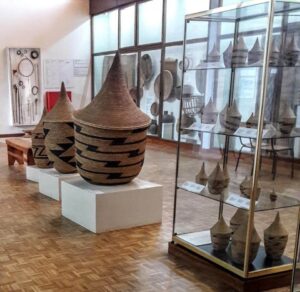
3. Kigali Genocide Memorial – Remembrance and National Resilience
One of the most important historical sites in all of Rwanda, the Kigali Genocide Memorial Center is dedicated to the memory of the victims of the 1994 Genocide Against the Tutsi.
Visiting this site helps gain a better understanding of the recent history of Rwanda and the country’s commitment to national unity. It adds a vital recent chapter to the country’s history.
4. Kandt House Museum – Early Colonial History
This museum, located in Kigali, houses the residence of the first colonial administrator from Germany.
It offers visitors a look into the country’s colonial evolution, the exploration of Africa by Europeans, and the political changes that affected the traditional systems of governance set up under the monarchy.
5. Rwanda Art Museum – Contemporary Creativity
This museum, located in Rwamagana, features contemporary Rwandan art, including paintings, sculptures, photography, and installations.
The artists find inspiration for their works from traditional elements, royal symbolism, and the country’s rich heritage, as seen at the King’s Palace.
6. Kigali Cultural Village – Living Traditions in Action
The Kigali Cultural Village offers a hands-on experience of the country’s traditions and history as it presents the following: live Intore dances, drumming and traditional music, and craft demonstrations such as basket weaving.
It offers a practical way of experiencing the traditions that were developed and practiced within the royal courts and the country at large.
Check out also some of our amazing guides to memorial museums across East Africa:
- Best Guide To Karen Blixen Nairobi, Kenya
- Kapenguria Six Museum
- Best National Museums Of Kenya
- Fascinating Guide To Olduvai Gorge Monument & Museum ~Tanzania’s Timeless Treasure
How Does the Palace Influence Rwanda Heritage Tourism?
King’s Palace Museum is at the heart of heritage tourism in Rwanda and is a cornerstone of its heritage tourism sector, playing a transformative role in restoring royal history, reinforcing cultural identities, and creating economic impacts.
The museum draws tens of thousands of tourists each year and provides economic benefits for the preservation of the palace, artefacts, professional guides, and community development around it.
Unlike other memorial and natural attractions, it brings history to life through living traditions such as daily Inyambo parades and performances of Intore dance and storytelling.
Located in Rwanda’s Southern Province, Kings Palace Museum Rwanda encourages visitors to extend their stay, directly benefiting local hotels, restaurants, artisans, and transport providers.
The museum creates employment opportunities for residents who work as tour guides, performers, cattle keepers, and curators, fostering both economic stability and pride in Rwanda’s pre-colonial heritage.
It also serves as a national classroom where students and scholars explore themes of governance, unity, and resilience rooted in the country’s royal legacy.
As part of a broader cultural itinerary linking other historical sites in the region, the museum strengthens Rwanda’s position as one of East Africa’s leading destinations for authentic and meaningful heritage tourism.
Conclusion
Kings Palace Museum, Rwanda, offers enormous cultural, emotive, and historical importance and provides something entirely different from the wildlife experiences offered elsewhere in the country.
It is not merely a collection of relics and artifacts, but a living expression of centuries of sophisticated kingship, where reconstructed beehive-style palaces rise overhead, and history feels present rather than preserved.
Here, Inyambo cows parade to traditional lullabies, Intore dancers perform with spears, and stories of the sacred royal drum Kalinga continue to echo the enduring spirit of the kingdom.
You are able to walk on the very ground that Mwami kings once ruled over and experience authentic architectural and ritualistic traditions that unified a nation.
By visiting the Kings Palace Museum, you directly contribute to preserving Rwanda’s royal heritage while empowering local tour guides, performers, cattle keepers, and artisans who work daily to keep these traditions alive.
Your visit transforms the experience from simply observing history into participating in a meaningful journey that supports communities and connects you to the very heart of Rwanda’s royal culture.
With Naicef, one of East Africa’s leading and most trusted tour companies, we specialize in crafting unforgettable cultural journeys tailored exactly to your interests. Contact us today at my@naicef.com or call +254799922277.
Book Any Tour Here
And let us take you to the royal heart of Rwanda.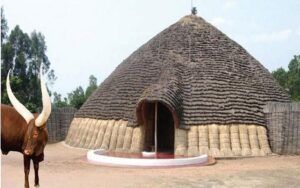
Frequently Asked Questions (FAQs) About Kings Palace Museum Rwanda
1. Is Kings Palace Museum Rwanda worth visiting?
Yes, absolutely worth visiting if you want an intimate, emotional, and educational cultural experience.
It offers reconstructed royal palaces, living Inyambo cow traditions, rich artefacts, Intore dance, and strong community engagement, making it one of Africa’s most inspiring and authentic heritage revival stories.
2. How many days do you need at Kings Palace Museum Rwanda?
One full day is ideal and usually sufficient. This gives you plenty of time for in-depth guided tours, Inyambo parades, cultural demonstrations, photography, and quiet reflection in the peaceful gardens to fully absorb the regal atmosphere.
3. Is Kings Palace Museum Rwanda safe for tourists?
Yes, it is safe. The site is professionally managed by the Rwanda Cultural Heritage Academy with highly trained guides, controlled entry points, secure facilities, and excellent visitor protocols.
No major incidents have ever been reported.
4. Can you see Inyambo cows at Kings Palace Museum Rwanda?
Yes, you can see the majestic Inyambo cows every day in their dedicated enclosure.
Daily viewing is free with your ticket, and special parades offer even closer, more spectacular encounters with traditional songs and rituals.
5. What is the best time of year to visit Kings Palace Museum Rwanda?
The dry seasons from June to September and December to February are best.
The weather is pleasant for outdoor parades and walking, paths are dry, and cultural performances run smoothly, though the site is beautiful year-round with fewer crowds in the green season.
6. How far is Kings Palace Museum Rwanda from Kigali?
Kings Palace Museum Rwanda is about a comfortable 2 to 3-hour scenic drive south from Kigali on excellent paved roads.
Many travelers make it a perfect full-day trip with plenty of time to explore.
7. Can you self-drive to Kings Palace Museum Rwanda?
Yes, self-driving is allowed with a valid ticket. A standard sedan or 4×4 is perfectly suitable, although most visitors find a guided tour adds enormous value through storytelling and deeper historical context.
8. What are the most common artefacts at Kings Palace Museum Rwanda?
Visitors most commonly see replicas of the sacred royal drum Kalinga, along with ceremonial shields and spears.
One also gets to view intricately woven royal baskets, thrones and stools, milk vessels, and beautifully preserved colonial-era furnishings inside the Art Deco palace.
9. Is the guided tour at Kings Palace Museum Rwanda worth it?
Absolutely, the guided tour is one of the absolute highlights and highly recommended.
It brings the entire royal history and traditions vividly to life with personal stories, cultural insights, and direct support for preservation efforts.
10. Can Kings Palace Museum Rwanda be combined with other sites?
The Kings Palace Museum Rwanda can be combined with other nearby sites.
It pairs beautifully with the Ethnographic Museum in Huye, which is only 30 minutes away.
Visitors can also include the Kigali Genocide Memorial or explore full southern Rwanda cultural routes for a rich, multi-day heritage experience.