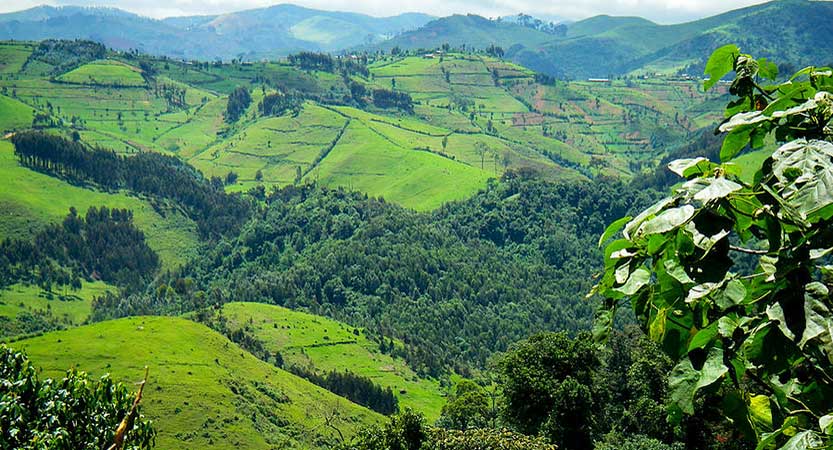
Did you know that Gishwati Mukura National Park is Rwanda’s fourth and newest national park, a thriving hub of biodiversity and eco-adventures nestled in the heart of the Albertine Rift?
With Naicef, let’s explore what Gishwati National Park looks like today, where ancient forests and modern conservation blend to deliver unforgettable experiences.
Gishwati Mukura National Park and Biosphere Reserve represents the country’s dedication to sustainable living, with a blend of what remains of the former Gishwati National Park and the smaller Mukura Forest, creating an essential ecological corridor.
What was once on the verge of extinction in Gishwati Forest in Rwanda has been reborn through ambitious reforestation efforts, creating a gateway to the wild side of Rwanda.
The location of the park in the western province of Rwanda, covering the districts of Rutsiro and Ngororero in the vicinity of Lake Kivu, makes it an ideal location for those looking for an off-the-beaten-path adventure compared to other, more popular sites.
This UNESCO biosphere reserve protects endangered species and supports the local population through revenue-sharing mechanisms, where 10% of tourism earnings directly support schools, health facilities, and infrastructure development.
So, which is the best Tour company to visit Gishwati Mukura National Park? The best Tour Company to visit Gishwati Mukura National Park is Naicef, and you can contact us at +254799922277 or email my@naicef.com to begin your Gishwati Mukura adventure today.
Book The Tour Here
What are the Interesting Facts about Gishwati Mukura National Park Rwanda?
Gishwati Mukura stands out because it is Rwanda’s newest national park, established in 2016 as a testament to the country’s environmental revival.
Offers regenerating forests, primate habitats, and community-focused eco-tourism in a more intimate setting.
Here are some of the most interesting facts about the park:
1. Home to over 200 bird species
Birdwatchers can find everything from Albertine Rift endemics like the vibrant Rwenzori turaco, the strange weaver, and the handsome francolin to various forest birds in the montane areas.
This makes it a paradise for ornithologists seeking rare sightings in bamboo and canopy zones.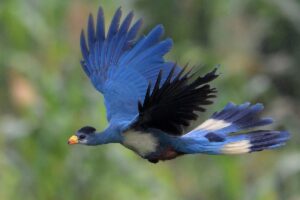
2. Gishwati Mukura National Park Rwanda covers about 34 square kilometers
This makes it compact enough for intimate explorations yet diverse enough for primate and bird encounters.
Allows visitors to cover multiple habitats from dense rainforest to open grasslands in a single day without the exhaustion of larger parks.
3. The Park Borders Lake Kivu region
The park forms part of a larger ecological corridor linked to Nyungwe Forest and beyond.
This facilitates wildlife movement and gene flow across borders with potential connections to Uganda and the Democratic Republic of Congo.
4. Gishwati Mukura National Park Rwanda contains waterfalls and trail
These features create a mix of forest and scenic ecosystems within the same protected area.
It includes the stunning Kazeneza Waterfall, which cascades through misty trails and provides refreshing stops during hikes.
5. It is officially a chimpanzee park
After years of degradation, restoration programs have revived habitats for eastern chimpanzees and other primates.
The park now hosts around 20-30 chimps in habituated groups, alongside golden monkeys and L’Hoest’s monkeys.
Mahale Mountains National Park is also one of the mind-blowing places you can venture to, known for large numbers of Chimpanzees normally estimated to range between 800-1000 of this species.
6. One of Africa’s conservation comeback stories
Few parks have rebounded as successfully after such dramatic forest loss through reforestation efforts.
Forest cover has increased from just 600 hectares in 2005 to over 3,000 hectares today, thanks to planting millions of trees and community involvement.
Did you know? Gishwati Mukura’s restoration has not only boosted biodiversity but also improved local livelihoods.
With over 1,000 community members employed in tourism and conservation roles, turning former poachers into guardians of the forest.
What is the History of Gishwati Mukura National Park?
The Gishwati Mukura National Park’s history is a tale of ecological degradation followed by one of Africa’s most impressive restoration stories.
In the early 20th century, Gishwati and Mukura forests were part of a vast rainforest belt that stretched from the Nyungwe Forest National Park to the Albertine Rift ecosystems of Uganda and the DRC.
This forest, which covered more than 70,000 acres, was home to chimpanzees, elephants, and a variety of birds.
This biodiversity thrived due to the rich volcanic soils and the high rainfall in the region.
In the 1970s, however, the situation began to change due to a surge in population, agriculture, cattle grazing, mining, and logging.
This situation was exacerbated after the 1994 Genocide Against the Tutsi, when the forests were cleared due to resettlement, leading to a situation where Gishwati Forest was reduced to about 600 hectares by the early 2000s.
The turning point came in 2007 when the Gishwati Area Conservation Program was initiated by the Rwandan government in partnership with other conservation entities.
This program focused on reforestation efforts, anti-poaching activities, and community engagement.
Also, chimpanzees were reintroduced to the area, and trees were replanted to restore the ecological balance.
Finally, in 2015, the forests were legally declared a national park to strengthen the environmental management efforts in the area.
In 2020, UNESCO declared the area a Biosphere Reserve in recognition of its importance in environmental management and sustainable development.
Today, with millions of trees planted and the primate populations thriving, along with eco-tourism helping to sustain local cooperatives, Gishwati Mukura Forests have become a symbol of Rwanda’s green growth and environmental strength.
Where is Gishwati Mukura National Park Located?
Gishwati Mukura National Park is situated in the Western part of Rwanda.
This makes it a great destination for tourists on a tour to explore the different lakes and forests in Rwanda.
Gishwati Mukura National Park is situated in the Western Province of Rwanda, mostly in the districts of Rutsiro and Ngororero, with extensions in Rubavu and Nyabihu districts.
This park is situated in a forested area that feels very different from the famous mountainous areas in Rwanda, such as the Virungas.
Gishwati National Park is 150 km (93 miles) from Kigali City in the northwest direction.
The drive to this park takes 3 to 4 hours via well-paved motorways that pass through hillside terraces, tea plantations, and villages.
Gishwati Mukura is geographically located on a ridge in the Albertine Rift Valley, which divides the Congo and Nile River basins.
It is located in a region with a range of 1,600 to 2,600 meters above sea level, which makes the conditions cool and temperate with mists. Gishwati Mukura National Park protects a range of attractive geographical features, such as the Kazeneza Waterfall, bamboo forests, and montane rainforests that are rich in biodiversity.
Because of its location in the west, the climate is generally cool and misty, which is different from the east.
This region receives enough rainfall to support thick vegetation, which is ideal for primate trekking and other eco-adventures.
This is a different experience from the savannah safari experience in the east.
Gishwati National Park is located about 40 minutes away from Lake Kivu, which allows tourists to visit this and other sites, such as coffee plantations.
What Activities Can You Do in Gishwati Mukura National Park?
Activities that can be done in Gishwati Mukura National Park are diverse, although primate tracking is the main attraction.
Gishwati Mukura offers several other immersive experiences and allows visitors to explore within the park’s compact yet varied terrain.
Here are some of the key activities, each designed to highlight conservation and culture:
1. Guided nature hikes on trails
This forest-based excursion allows you to observe waterfalls like Kazeneza, scenic panoramic views of volcanic ridges, and Lake Kivu.
With hikes ranging from 2-8 hours and suitable for moderate fitness levels, often include educational stops on plant uses by local communities.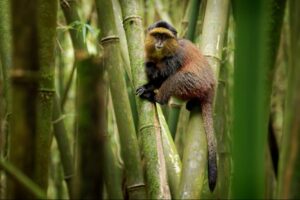
2. Birdwatching tours
With over 200 species recorded, guided birding tours are especially rewarding during the wet season.
Focusing on endemics like the Archer’s robin-chat and providing binoculars and expert guides to spot elusive species in the canopy or wetlands.
See also some of our other places to do birding:
- Fascinating Guide To Katavi National Park Tanzania
- Best Guide To Jozani Chwaka Bay National Park Zanzibar
- Rewarding Bird Watching In Kenya – Get Your Wings Up & Binoculars Ready!
- 3 Days Nakuru Bird Watching in Kenya Safari
3. Community experiences
Visitors can join farm stays at nearby cooperatives, learn beekeeping techniques that support pollination and honey production, and tour organic tea plantations.
They get to understand sustainable agriculture, or participate in traditional dances, handicraft weaving (basket-making with sisal), and cooking classes using local ingredients like bananas and beans.
4. Conservation tours
Learn about reforestation strategies through tree-planting sessions, wildlife monitoring via camera trap reviews, and park management efforts like anti-erosion terracing.
Offers behind-the-scenes insights into how tourism funds habitat restoration.
5. Overnight camping or picnics
For a deeper immersion, set up eco-camps in designated forest clearings with ranger accompaniment, enjoying stargazing and sounds of nocturnal wildlife, or have guided picnics near waterfalls for relaxed scenic enjoyment.
Check out also for some of our other camping & picnic experiences;
- Best Camping Safari Kenya Guide
- Best Picnic Places In Kenya ~ Sunshine, Snacks & Chill Spots, Picnic Vibes Only!
- One Day Picnic Package Tour
- 4 Days Mount Meru Trekking Package
What is the Chimpanzee Tracking in Gishwati, and how does it work?
The chimpanzee tracking in Gishwati is one of the park’s signature experiences, providing an intimate opportunity to observe eastern chimpanzees in their natural, regenerating habitat.
Gishwati Forest supports a habituated group of around 20-30 chimpanzees, along with a rich primate ecosystem that includes golden monkeys and colobus.
Limited to small groups of 6-8 to minimize disturbance, and must be booked in advance via the Rwanda Development Board, or you can book directly with us at Naicef:
Book Here
The experience begins early in the morning, at dawn, at the park headquarters in Gishwati sector, where a briefing is given regarding the dos and don’ts, such as maintaining a 10-meter distance.
Accompanied by expert trackers who use radio collars and fresh signs such as nests or fruit leftovers to track the chimps.
The trek takes about 2 to 4 hours, depending on the location of the chimps.
After finding the chimps, one gets to see their activities, such as grooming, using tools to crack nuts, using stones, and playful interactions among members of the same family.
This tracking of chimpanzees is different from the usual hiking experience, as it is an active and scenic view of a large number of primates concentrated in the canopy of the rainforest, and one gets to see other wildlife en route.
This tracking of chimpanzees is especially interesting to photographers and nature lovers, but one needs to have moderate fitness levels because of the terrain, which may involve rain.
After the tracking, one gets to hear discussions about conservation, including the role of the fees paid in supporting conservation in the community.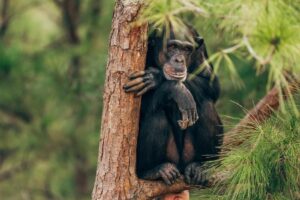
Which Is the Best Time to Visit Gishwati Forest Rwanda?
Understanding the best time to visit Gishwati Forest Rwanda depends on what kind of experience you’re seeking.
Primate trekking, comfort, birdwatching, photography, or immersive green landscapes.
- Dry Season (June to September & December to February)
These months are generally considered the most favorable for chimpanzee tracking in Gishwati. Trails are firmer, less slippery, and easier to navigate.
Visibility improves in the forest, making wildlife sightings and photography more rewarding.
For travelers prioritizing primate trekking, guided hikes, and comfortable walking conditions, this is the ideal window.
The dry season also aligns well with peak gorilla trekking in Volcanoes National Park, allowing seamless itinerary combinations.
- Green Season (March to May & October to November)
The wet months transform Gishwati Forest Rwanda, into a vibrant emerald landscape.
Vegetation thickens, waterfalls and streams swell, and bird activity intensifies.
For birdwatchers and photographers seeking dramatic mist-filled forest scenes, this period is incredibly rewarding.
Chimpanzee tracking remains available, though hikes may be slightly more challenging due to muddy terrain. The trade-off? Richer colors, fewer visitors, and often more flexible lodge availability.
For most travelers, June to September offers the best overall balance of comfort, wildlife visibility, and itinerary flexibility.
What Are the Best Gishwati National Park Rwanda Lodges and Accommodation Options?
Accommodation around Gishwati Mukura National Park is intentionally limited, supporting the park’s low-impact conservation model.
While there are no large-scale resorts inside the park itself, several carefully positioned properties offer comfort, access, and integration with Rwanda’s western tourism circuit.
Here are some of the best options:
1. Forest of Hope Guest House
Located close to the park boundary, this eco-conscious property is directly linked to community conservation initiatives.
It offers simple but comfortable rooms and a strong sustainability ethos.
Staying here provides a more immersive conservation tourism experience, with proceeds supporting local livelihoods and reforestation projects.
2. Lake Kivu Serena Hotel
Situated along the shores of Lake Kivu in Gisenyi, this upscale hotel offers spacious rooms, a swimming pool, lakeside dining, and conference facilities.
It is ideal for travelers who want to combine chimpanzee tracking in Gishwati with relaxation by the lake. The drive to the park is manageable, making it a strong luxury pairing.
3. Cormoran Lodge
Perched above Lake Kivu near Karongi, Cormoran Lodge features wooden chalets with panoramic lake views.
Its tranquil setting complements Gishwati’s forest atmosphere beautifully. It’s particularly suitable for couples or travelers looking for scenic western Rwanda experiences beyond the park.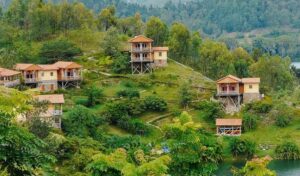
4. Ruzizi Tented Lodge
While located inside Akagera National Park, Ruzizi Tented Lodge is worth mentioning for travelers designing broader conservation-focused itineraries.
Its eco-luxury tented model represents Rwanda’s sustainable tourism philosophy, similar to what Gishwati aims to expand toward in the future.
5. Nyungwe House
Located near Nyungwe Forest National Park, Nyungwe House (One&Only) is ideal for high-end travelers, combining chimpanzee tracking experiences across multiple forests.
Pairing Nyungwe and Gishwati creates a compelling primate-focused conservation journey.
6. Paradise Malahide
A more relaxed lakeside option near Rubavu, Paradise Malahide offers comfort, lake access, and an informal atmosphere.
It is well-suited for travelers wanting affordability while still enjoying Lake Kivu’s setting alongside forest excursions.
As tourism infrastructure develops, expected more eco-lodges positioned directly within the biosphere reserve, focusing on sustainability, small footprints, and community integration.
How does the experience in Gishwati Mukura National Park compare, and why choose it over other National Parks?
Gishwati Mukura offers a more personal and emerging experience in its 34 square kilometers.
The park is smaller, less touristy, and more accessible for restoration-focused adventures, which focus more on the narrative of restoration and renewal with forests that are regenerating and offer more personal experiences with wildlife.
While you might not see as many varieties of primates and quantities of them, you will still enjoy real experiences of chimpanzee interactions in a serene environment, with golden monkeys being the stars of the show in the bamboo forests.
Other parks, such as Nyungwe Forest National Park, might offer more variety, quantity, and tourist infrastructure, such as viewing platforms; Gishwati National Park offers exclusivity, restoration stories, and community integration, such as beekeeping with the locals.
If you are doing a combination of chimpanzee and gorilla tracking in Rwanda, Gishwati Mukura is the perfect accompaniment if you are looking for a less touristy experience, offering a contrast to the grandeur of Nyungwe while being more accessible and budget-friendly from Lake Kivu.
What Is Conservation Tourism in Rwanda?
In Rwanda, conservation tourism is a step further in comparison to ecotourism.
While ecotourism is more about sustainability, conservation tourism is about supporting the funding of ecosystem conservation and restoration.
The funding of wildlife monitoring, anti-poaching, restoration, and biodiversity research is directly related to tourism. Gishwati Mukura National Park is the purest form of conservation tourism.
Key features of conservation tourism in Rwanda include:
- Strict permit systems for endangered species (e.g. Gorillas and chimpanzees)
- Revenue-sharing programs with local communities
- Public-private conservation partnerships
- Science-backed wildlife management
The philosophy is simple but powerful: tourism must pay for protection.
Without tourism revenue, conservation would rely solely on donor funding. Rwanda ensures that visitors directly contribute to preserving what they came to see.
What Are Community Tourism Models in Rwanda?
Community tourism models in Rwanda are structured systems that ensure local populations benefit directly from tourism activities.
Rather than excluding nearby communities from protected areas, Rwanda integrates them into the tourism value chain. This reduces human-wildlife conflict and creates long-term conservation incentives.
Community tourism in Rwanda operates through:
1. Revenue Sharing Programs
A portion of national park tourism revenue is allocated to community-led projects such as schools, clean water systems, and cooperatives.
2. Local Employment
Park rangers, guides, lodge staff, trackers, and conservation workers are often recruited from nearby communities.
3. Cultural Tourism Experiences
Villages surrounding parks offer cultural visits, traditional dance performances, agricultural tours, and handicraft markets. This provides alternative income sources while preserving heritage.
4. Cooperative Enterprises
Women’s cooperatives, beekeeping groups, basket-weaving associations, and sustainable farming initiatives are integrated into tourism supply chains.
Gishwati Mukura National Park, for example, communities near participate in tourism-linked enterprises that reduce dependence on forest resources.
The result is a shared-benefit system where conservation success improves livelihoods, and improved livelihoods reduce environmental pressure.
What Is Rwanda’s Reforestation Success Story?
Rwanda’s reforestation success story refers to the country’s remarkable achievement in recovering degraded landscapes through effective environmental policy, community engagement, and conservation tourism.
Rwanda was in the late 20th century experiencing major deforestation. This was caused by an increase in population, farming, and settlement. Forest cover was reduced to a great extent in some parts of the country.
However, in the past two decades, the country has been using intensive reforestation and land rehabilitation techniques.
This includes:
Gishwati Mukura National Park, indigenous tree planting schemes, agroforestry, forest corridors, environmental protection laws, and biosphere reserves.
This park was restored to its former state after being degraded. This landscape was recognized by UNESCO as a biosphere reserve.
What makes this reforestation story unique in Rwanda is that it’s not only an environmental story; it’s an economic and social one.
How Does Gishwati Mukura National Park Support Eco Tourism Rwanda?
Gishwati Mukura National Park is the next generation of Eco-Tourism in Rwanda, one that is focused not just on preserving biodiversity, but on restoring what was previously lost.
Tourism revenues directly support conservation management efforts.
Park entry fees help support chimpanzee monitoring, forest patrols, biodiversity studies, and reforestation activities.
Gishwati Forest Rwanda, is, unlike older parks that focus on protection, a park that is rebuilding an ecosystem.
Eco-Tourism in the surrounding areas is a critical factor in the conservation of biodiversity in the park.
The villages surrounding the park have been involved in alternative economic activities such as sustainable agriculture, bee-keeping, handicrafts, and cultural tourism.
The fact that it is a Biosphere Reserve under UNESCO’s World Heritage Programme brings in the dimensions of research, education, and planning into the tourism concept itself.
So a framework exists in which conservation, research, and economic development can function in harmony, rather than in contradiction to one another.
It is evident that Gishwati does not simply conserve nature; it rebuilds it, and a significant proportion of that rebuilding is paid for through sustainable tourism.
Conclusion
In a country celebrated for gorilla trekking in Volcanoes National Park and classic safaris in Akagera National Park, Gishwati Mukura National Park offers something profoundly different.
It is a living conservation success story still unfolding, where restoration, community empowerment, and sustainable tourism come together in one regenerating forest landscape.
This is not just a destination where you track chimpanzees or hike to waterfalls; it is a regenerating forest that embodies Rwanda’s commitment to restoration, community empowerment, and sustainable tourism.
From its dramatic history of deforestation to its recognition as a UNESCO Biosphere Reserve, Gishwati Mukura National Park stands as proof that damaged ecosystems can recover.
This recovery becomes possible when conservation, policy, and local livelihoods align.
Choosing to visit is more than adding another park to your itinerary.
It is participating in Rwanda’s green growth journey, supporting communities, and witnessing firsthand how tourism can actively rebuild nature rather than simply observe it.
For a personalized experience, reach out to Naicef via our contact email at my@naicef.com or call:+254799922277.
Also, you may;
Book Any Tour Here
With Naicef, the leading tour company in Kenya and one of the best Tour Companies in East Africa, we craft unforgettable journeys.
We are the best travel blog in Africa, delivering memorable Tours.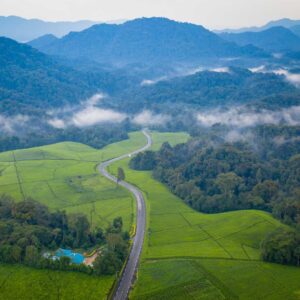
Frequently Asked Questions About Gishwati Mukura National Park
1. Is Gishwati Mukura National Park worth visiting?
Yes, Gishwati Mukura National Park is absolutely worth visiting, especially if you want an intimate eco-experience in Rwanda.
It offers chimpanzees alongside regenerating forests, waterfalls, diverse landscapes, and strong community ties also Africa’s most successful conservation comeback stories, providing a unique blend of adventure and inspiration for those interested in sustainability.
2. How many days do you need in Gishwati Mukura National Park?
Two to three days are ideal for your visit to Gishwati Mukura National Park.
This allows enough time for chimpanzee tracking, a full-day nature hike with waterfall visits, at least one community experience like a tea tour, and relaxation at a lodge to absorb the serene forest atmosphere.
3. Is Gishwati Mukura National Park safe for tourists?
Yes, Gishwati Mukura National Park is very safe for tourists.
The park is professionally managed by the Rwanda Development Board in partnership with conservation organizations
4. Can you see chimpanzees in Gishwati Mukura National Park?
Yes, you can see chimpanzees in Gishwati Mukura National Park.
It is home to eastern chimpanzees, golden monkeys, L’Hoest’s monkeys, blue monkeys, black-and-white colobus, and many more.
5. What is the best time of year to visit Gishwati Mukura?
The best time is during the dry seasons from June to September and December to February. Wildlife is easier to spot because animals are more active, trails are drier, and visibility is better. Rainy seasons offer lush scenery and birding at lower costs.
6. How far is Gishwati Mukura National Park from Kigali?
Gishwati Mukura is about a 3 to 4-hour drive from Kigali along scenic paved roads through hills and plantations.
This makes it one of the most accessible forest parks in Rwanda. Many visitors begin their adventure on the same day they land, with options for private transfers or self-driving.
7. Can you self-drive in Gishwati Mukura National Park?
Yes, self-driving is allowed with a valid permit. However, a 4×4 vehicle is strongly recommended, especially during the rainy season when trails can be muddy, and guided options are preferred for navigation and safety.
8. Is the chimpanzee tracking in Gishwati worth it?
Absolutely, the chimpanzee tracking is one of the highlights of visiting Gishwati Mukura.
It offers close, ethical views of chimps and other primates in a serene, regenerating forest setting, with the added value of supporting conservation through your permit fees.
9. Can Gishwati Mukura be combined with gorilla trekking in Rwanda?
Yes, one can combine Gishwati Mukura with Volcanoes National Park for gorilla trekking.
This combination allows you to experience both forest primates like chimps and mountain gorillas in one itinerary, with easy drives between sites and options to include Lake Kivu for variety.