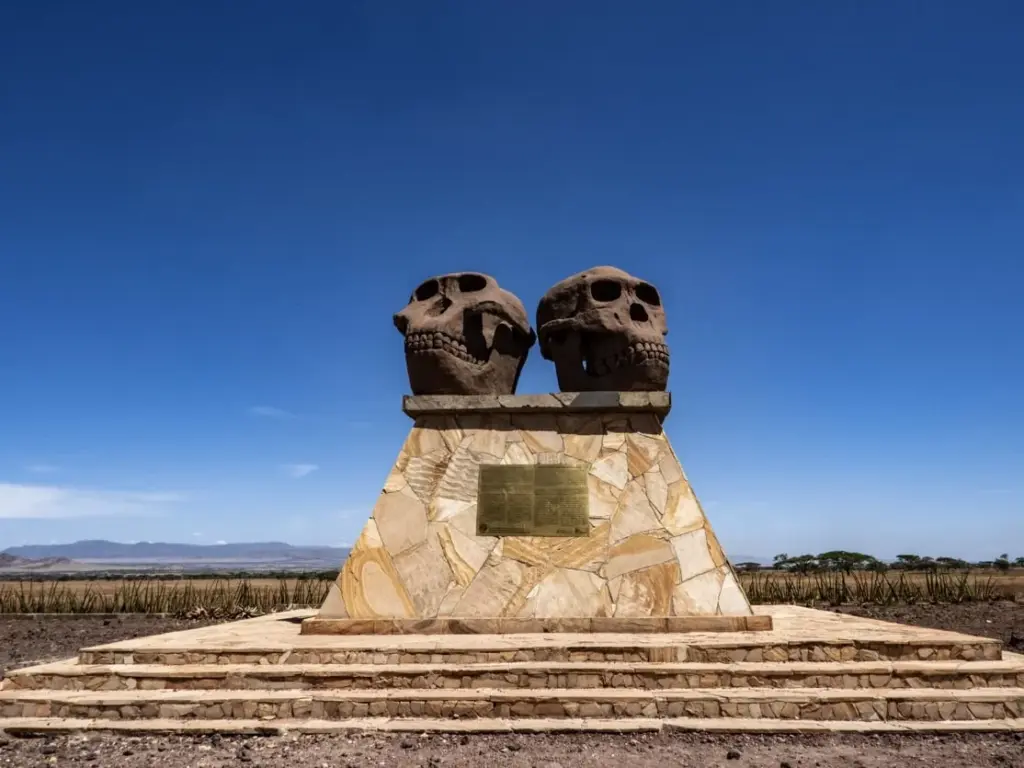
What mysteries await inside the Olduvai Gorge Monument & Museum? With Naicef, learn about the Olduvai Gorge Museum, which is not just a collection of fossils and tools, but a living archive where humanity’s earliest footsteps echo through time.
The layers of Olduvai Gorge History reveal astonishing discoveries: skulls, stone tools, and footprints that answer the haunting question, “What is Olduvai Gorge famous for?”
And if you’re wondering, “Where is Olduvai Gorge located?”, stick along to know it all!
So, which is the best tour company to the Olduvai Gorge Monument & Museum? The best tour company to the Olduvai Gorge Monument & Museum is Naicef, and you can reach us out via email at my@naicef.com or simply tap:+254799922277.
You can also opt to;
Book The Tour Here
Suspense lingers in the soil because every excavation could still reveal a new chapter of our story, and so what are you waiting for? Let’s dive right into it!
What Is The Overview Of Olduvai Gorge Monument & Museum?
Olduvai Gorge Monument & Museum is widely recognized as Africa’s most important paleoanthropological site, allowing visitors to explore fossils, tools, and reconstructions of early human life.
This dramatic ravine has exposed sedimentary layers that preserve a continuous record of human and environmental history spanning almost 2 million years.
It remains a hub for ongoing research, with international teams continuing excavations and discoveries.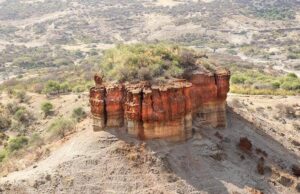
Do You Know About The Olduvai Gorge History?
The Olduvai Gorge history began back then in 1911 when it was first noted by German entomologist Wilhelm Kattwinkel, who stumbled upon fossilized bones while chasing a butterfly.
It is actually an interesting story as he had arrived in East Africa to study sleeping sickness, and outside the lab, he loved chasing butterflies.
Just on a random day, as he was carrying on his hobby, he got swayed away into a gorge unlike any other. Scattered in the soil were ancient bones and stone tools, silent traces of lives long gone.
He called the place ‘Oldoway,’ after mishearing the Maasai word Oldupai, the wild sisal plant that grows there, not knowing that the world would later come to know it as Olduvai Gorge, the cradle of humankind.
Later, in the 1930s, systematic excavations began, attracting global attention.
In the mid‑20th century, the Leakeys, Louis and Mary Leakey, transformed Olduvai into a cornerstone of human origins research. In 1959, Mary Leakey discovered Australopithecus boisei, nicknamed “Nutcracker Man,” a hominin fossil dating back 1.75 million years.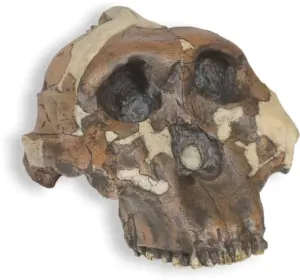 Later, between 1960 and 1961, the Leakeys identified Homo habilis, “handy man”, considered one of the earliest tool‑makers, and thus these discoveries provided the first concrete evidence that early humans lived in East Africa.
The gorge’s stratigraphy reveals a layered timeline of human and environmental evolution:
- Bed I (1.85–1.7 million years ago): Oldowan stone tools, fossils of Homo habilis.
- Bed II (1.7–1.2 million years ago): Acheulean hand axes, fossils of Homo erectus.
- Beds III & IV (1.2–0.6 million years ago): Advanced tools, evidence of hunting, and social organization.
Later beds preserve more recent human activity, showing adaptation to climate and ecological shifts.
Locally, before European explorers named it “Olduvai,” the place was known as Oldupai, derived from the Maasai word for the wild sisal plant that grows in the area.
Other names like Nyanza, Ukerewe, and Nalubaale reflect how surrounding communities tied the gorge and its landscapes to spiritual and cultural traditions.
Where is Olduvai Gorge Located?
The location of Olduvai Gorge is in northern Tanzania, right inside the Ngorongoro Conservation Area, which itself is a UNESCO World Heritage Site.
Think of it as the VIP section of East Africa’s natural and cultural wonders, Serengeti National Park on one side, Ngorongoro Crater on the other, and Olduvai right in the middle holding the secrets of humanity.
The gorge stretches about 48 kilometers long and plunges up to 100 meters deep, like nature’s very own history textbook carved into the earth.
The distance from Arusha to Olduvai Gorge is roughly 300 km, making it about a 5 to 6-hour drive, depending on how many giraffes block the road, yes, that happens.
On the other hand, the Karatu to Olduvai Gorge distance is about 45 km, making it a convenient day trip, and from Ngorongoro Crater to Olduvai Gorge, it’s just 30 km. This then means that you can go from spotting Lions to spotting fossils in under an hour.
So if you’re wondering “Where is Olduvai Gorge located?”, the answer is simple. It is in the middle of Tanzania’s safari circuit, perfectly placed to combine wildlife adventures with a crash course in human evolution.
And unlike your high school history class, this one comes with zebras grazing nearby.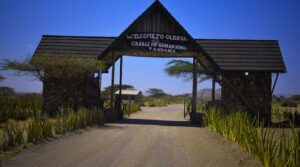
What is Olduvai Gorge Famous For?
“What is Olduvai Gorge famous for?” is a question most people wonder, and the simplest answer to that is, it’s where humanity’s story was dug up, dusted off, and proudly displayed.
The gorge is world‑renowned for the discoveries made by the Leakey family in the mid‑20th century, such as fossils of Homo habilis, who earned the title “handyman” because of his tool‑making skills. Imagine being remembered forever because you figured out how to hit rocks together.
Beyond fossils, Olduvai Gorge is famous for stone tools, skulls, and even Olduvai Gorge footprints preserved in nearby Laetoli, which show early humans walking upright 3.6 million years ago.
This Olduvai Gorge discovery answered the big question: “Where did humans come from?”
So, whether you’re fascinated by Olduvai Gorge tools, intrigued by Olduvai Gorge skulls, or just want to brag that you’ve stood where the Olduvai Gorge Leakey family made history, this site is the ultimate time machine.
Are you ready to discover the Olduvai Gorge Museum? See this amazing tour below;
| Day/Time | Route | Details | Activities |
| Day 1
7:30 a.m to 9:00 p.m |
Arusha → Tarangire National Park | Begin your private 5 Days safari in Tanzania with a morning pickup in Arusha. Drive about 2.5 hrs to Tarangire, arriving mid‑morning for your first game drive. Enjoy a gourmet picnic lunch by the Tarangire River, continue with an afternoon drive, then relax with a private sundowner. Dinner and overnight at a luxury lodge. | · Scenic drive (2.5 hrs) · Morning & afternoon game drives · Gourmet picnic lunch · Private sundowner · Luxury lodge dinner |
| Meal Plan: Lunch & Dinner {L, D} | |||
| Day 2
7:00 a.m to 7:30 p.m |
Tarangire → Ngorongoro Crater | After breakfast, drive about 3 hrs to Ngorongoro. Descend into the crater for a full‑day luxury game drive, spotting the Big Five. A chef‑prepared picnic lunch is served on the crater floor. In the late afternoon, ascend to the rim for panoramic views, then enjoy fine dining at your lodge. | · Scenic drive (3 hrs) · Full‑day crater game drive · Chef‑prepared picnic lunch · Crater rim views · Luxury lodge dinner |
| Meal Plan: Breakfast, Lunch & Dinner {B, L, D} | |||
| Day 3
7:00 a.m to 7:30 p.m |
Ngorongoro → Exclusive Olduvai Gorge Tours → Serengeti | Depart Ngorongoro after breakfast for a 1.5 hr drive to Olduvai Gorge. Enjoy an Exclusive Olduvai Gorge tour with a private guide. Continue for about 3 hrs into Serengeti, pausing for a picnic lunch. Arrive at your luxury tented camp mid‑afternoon, followed by an evening game drive and dinner under the stars. | · Exclusive Olduvai Gorge tours · Museum & guided visit · Scenic drive into Serengeti · Afternoon game drive · Luxury tented camp dinner |
| Meal Plan: Breakfast, Lunch & Dinner {B, L, D} | |||
| Day 4
6:30 a.m to 7:30 p.m |
Serengeti National Park | Begin with an early breakfast, then a morning game drive from 7:00 a.m. You can also opt for a hot-air balloon safari. Depending on the season, witness the Great Migration or predator tracking. Enjoy a gourmet bush lunch at 12:30 p.m, followed by an afternoon drive until 5:00 p.m. Conclude with a private sundowner and alfresco fine dining. | · Morning & afternoon game drives · Great Migration (seasonal) · Gourmet bush lunch · Private sundowner · Alfresco fine dining |
| Meal Plan: Breakfast, Lunch & Dinner {B, L, D} | |||
| Day 5
7:30 a.m to 3:00 p.m | Serengeti → Karatu → Arusha → Departure | After breakfast, drive about 3 hrs to Karatu for a boutique lodge brunch and optional coffee estate tour. Depart at 12:30 p.m for Arusha, arriving around 3:00 p.m. Transfer to your hotel or Kilimanjaro International Airport for departure. Your exclusive 5 Day African Safari Tanzania concludes with memories of Tarangire’s elephants, Ngorongoro’s crater floor, Serengeti’s endless plains, and Olduvai Gorge’s timeless history. | · Boutique lodge brunch · Optional coffee estate tour · Scenic return drive (3 hrs) · Airport transfer |
| Meal Plan: Breakfast & Lunch {B, L} | |||
You can;
Book This Tour Here
Olduvai Gorge Monument & Museum
The Olduvai Gorge Monument & Museum is the modern gateway to this ancient site. Managed by the Ngorongoro Conservation Area Authority (NCAA), the museum has been upgraded with new facilities that make it both educational and engaging.
Inside, you’ll find exhibits of fossils, stone tools, and reconstructions of early human life. It’s like walking through humanity’s family album, except instead of embarrassing baby photos, you get 1.8‑million‑year‑old skulls.
The museum highlights the work of archaeologists, especially the Leakey family, and explains why Olduvai Gorge is central to human origins in Tanzania.
Visitors can see replicas of famous discoveries, learn about excavation techniques, and even step outside to view the actual dig sites. It’s not just science, it’s storytelling, showing how climate, geology, and human ingenuity shaped our species.
The Olduvai Gorge Monument itself commemorates the site’s global importance. Standing there, you realize you’re not just in a museum, you’re in the middle of the world’s greatest archaeological classroom.
So if you’re searching for Archaeology at Olduvai Gorge, or want to impress your friends by saying you’ve seen the “birthplace of mankind,” the museum is the perfect stop.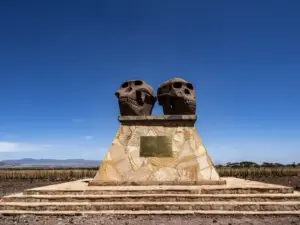
What Are The Olduvai Gorge Tour Activities?
The Olduvai Gorge tour activities include guided Museum tours, historical storytelling tours, and even a combined safari & Olduvai visit. Here’s a detailed breakdown of these Olduvai Gorge tours & activities:
1. Guided Olduvai Gorge Museum Tours
Explore the Olduvai Gorge Museum, where fossils, stone tools, and reconstructions bring human origins to life. Expert guides explain discoveries by the Leakey family, including Homo habilis and Australopithecus boisei.
Exhibits here showcase Olduvai Gorge tools, skulls, and even replicas of excavation sites. Guides often add storytelling flair, making you feel part of the excavation team.
It is perfect for families, students, and anyone curious about evolution, and it usually takes a 1 to 2-hour guided tour, depending on how many questions you ask and how many jokes the guide cracks.
Ever heard of the Koobi Fora Museum? Adventure continues,,,,,,,,,,. The Koobi Fora Museum is also one of the amazing historical places found in Kenya, within Sibiloi National Park, that preserves the historical origins of mankind.
Check it out in our amazing tour below, among other tours to prehistoric places such as Fort Jesus, Kapenguria Museum, Vasco Da Gama Pillar, & Gedi Ruins, and you will surely be swayed away:
- 6-Day Self-Drive Kenya To Koobi Fora ~Venture
- 3 Days Mambrui Sand Dunes Package
- 3 Days Beach Vacation in Kenya
- 3 Days Western Kenya Cultural Tour Package
- Full Day Nairobi City Tours Package
- Best Guide To Karen Blixen, Nairobi, Kenya
2. Historical Storytelling Tours
Specialised guides focus on archaeology and human evolution as they explain geological layers (Beds I–IV) and what each reveals about early humans. You’ll hear stories of Mary Leakey’s famous 1959 discovery of “Nutcracker Man.”
The tours highlight tools, footprints, and skulls that shaped our understanding of evolution, making it ideal for history buffs, archaeology students, or anyone who loves a good origin story.
3. Panoramic Gorge Views
Beyond the museum, visitors can walk to viewpoints overlooking the gorge that stretches 48 km, offering breathtaking scenery. Guides explain how volcanic activity and erosion exposed layers of history.
It is a great place for reflection, meditation, or just pretending you’re in a National Geographic special, making it a photographer’s dream, fossils below, Serengeti plains beyond.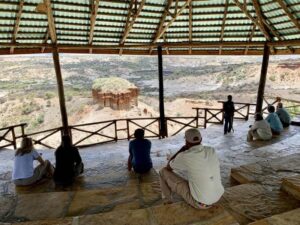
4. Combining Safari & Olduvai Visit
Olduvai Gorge Monument & Museum sits between Serengeti National Park and Ngorongoro Crater, making it easy to add to safari itineraries.
Picture this! Watching as the Big Cats (Lions, Leopards, & Cheetahs) hunt in the morning and then later in the afternoon, stand where humans first picked up tools. Amazing, right?
This combination adds cultural depth to wildlife adventures, balancing nature with history. It’s like binge‑watching a documentary, except you’re the main character.
Here are some of our experiences that can be customised to combine these two experiences:
- 3 Day Safari Serengeti Ngorongoro Package Tour
- 3 Days Serengeti Fly In Safari Luxury Tour
- 4 Days Northern Circuit Safari Tanzania
- 5 Days Serengeti Migration Safari
When Is The Best Time To Visit Olduvai Gorge Monument & Museum?
The best time to visit Olduvai Gorge Monument & Museum is during the dry season between June and October, when the roads are easier to navigate and the skies are clear for panoramic views.
The wet season (November to May) brings lush greenery and prime birdwatching, but also mud, so pack sturdy shoes unless you want to invent “slip‑and‑slide archaeology.”
Travel tip: bring water, sunscreen, and curiosity. Fossils may be millions of years old, but dehydration sneaks up faster than you think.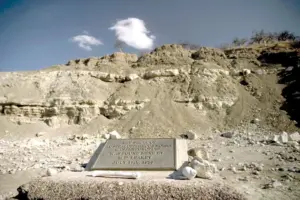
Which Are The Hotels & Accommodations Near Olduvai Gorge?
The hotels & accommodations near Olduvai Gorge Monument & Museum include Karatu lodges, Ngorongoro luxury lodges, Serengeti Safari Camps, and even backpackers’ stays.
Here are more details on each of these options that cater to different traveler styles, ensuring comfort after a day of exploring fossils and history:
1. Karatu Lodges & Guesthouses
Karatu is the closest town with a wide range of comfortable mid-range lodges that offer boutique stays with gardens, pools, and cozy dining areas. They are ideal for travelers who want affordability without sacrificing comfort.
On the other hand, guesthouses provide authentic local immersion, with home‑cooked meals and cultural interactions. Backpackers often choose Karatu for budget stays before heading to Ngorongoro or Serengeti.
Conveniently, these accommodations are located about 45 km from the Olduvai Gorge Museum, making day trips easy.
2. Ngorongoro Luxury Lodges
These are high‑end lodges perched on the rim of Ngorongoro Crater, and most of them offer breathtaking views, fine dining, and spa services. They are perfect for honeymooners or travelers who want to pair archaeology with luxury.
They are situated about 30 km from Olduvai Gorge, making it a short drive.
3. Serengeti Safari Camps
They range from budget tented camps to ultra‑luxury lodges inside Serengeti National Park. These are ideal for travelers combining wildlife safaris with an Olduvai Gorge stop.
The budget camps are simple tents, shared facilities, and close encounters with nature, whereas the luxury camps have private suites, gourmet dining, and guided game drives.
Conclusion
Standing at the Olduvai Gorge Monument & Museum, you don’t just see fossils, you feel the weight of nearly two million years pressing through the earth, whispering the untold chapters of our shared story.
The Olduvai Gorge Museum is more than a building; it is a living archive where stone tools, skulls, and footprints remind us that humanity’s journey began here.
The layers of Olduvai Gorge History reveal secrets of Homo habilis and Australopithecus boisei, discoveries that answered the haunting question:
“What is Olduvai Gorge famous for?” It is famous for being the place where science proved Africa to be the cradle of humankind.
And when you ask, “Where is Olduvai Gorge located?”, the answer is as thrilling as the site itself is right in the heart of Tanzania’s safari circuit, between Serengeti and Ngorongoro, where lions roam, and fossils lie side by side.
This is not just a destination; it is a time machine. Every step at Olduvai is a step closer to understanding who we are, where we came from, and how far we’ve journeyed.
The suspense lies in the soil. What discovery might still be waiting beneath the surface?
Now it’s your turn to walk into history. Book your immersive adventure with Naicef and let the gorge’s silence speak to you. You can do this by contacting us at +254799922277 or email my@naicef.com. You can even;
Book Any Tour Here
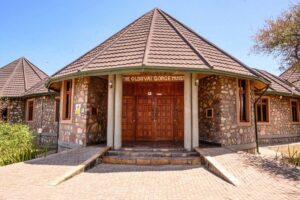 Combine your safari with the Olduvai Gorge Monument & Museum in Africa, and experience the thrill of standing at the birthplace of mankind.
Frequently Asked Questions (FAQs) About Olduvai Gorge Monument & Museum
1. What is Olduvai Gorge famous for?
Olduvai Gorge is famous as the “Cradle of Mankind.” It is one of the most important archaeological sites in the world, where fossils of early humans and stone tools dating back nearly 2 million years were discovered.
2. Where is Olduvai Gorge located?
The Olduvai Gorge Monument & Museum is located in northern Tanzania, within the Ngorongoro Conservation Area, between Serengeti National Park and Ngorongoro Crater.
3. What can visitors see at the Olduvai Gorge Museum?
The Olduvai Gorge Museum displays fossils, artifacts, and reconstructions of early human life. Visitors can also explore excavation sites and learn about the discoveries made by the Leakey family.
4. What is the history of Olduvai Gorge?
Olduvai Gorge history dates back millions of years. Excavations began in the 1930s, led by Louis and Mary Leakey, who uncovered fossils of Australopithecus boisei and Homo habilis. These discoveries reshaped our understanding of human evolution.
5. Why is the Olduvai Gorge Monument important?
The Olduvai Gorge Monument & Museum commemorates the site’s global significance as a heritage landmark. It symbolizes humanity’s shared origins and Tanzania’s role in preserving this history.
6. How long is Olduvai Gorge?
The gorge stretches about 48 kilometers long and is up to 90–100 meters deep, exposing sediment layers that reveal a timeline of human and environmental evolution.
7. Can tourists visit Olduvai Gorge easily?
Yes. Most safari itineraries in northern Tanzania include a stop at Olduvai Gorge Museum. It is accessible by road from Arusha, Ngorongoro, and Serengeti.
8. What makes Olduvai Gorge unique compared to other archaeological sites?
Unlike many fossil sites, Olduvai Gorge offers a continuous record of human evolution spanning nearly 2 million years, with fossils, tools, and preserved landscapes all in one location.
9. Who discovered Olduvai Gorge’s fossils?
The most famous discoveries were made by Louis and Mary Leakey in the mid‑20th century. Their work revealed early human species and stone tools, making Olduvai a cornerstone of paleoanthropology.
10. What species were found at Olduvai Gorge?
Fossils of Australopithecus boisei, Homo habilis, and Homo erectus were discovered here, along with evidence of early stone tool use.
11. Is Olduvai Gorge part of a UNESCO World Heritage Site?
Yes. Olduvai Gorge is part of the Ngorongoro Conservation Area, which was declared a UNESCO World Heritage Site in 1979.
12. What activities can visitors do at Olduvai Gorge?
Visitors can tour the Olduvai Gorge Museum, explore excavation sites, attend lectures by guides, and enjoy panoramic views of the gorge’s dramatic landscapes.