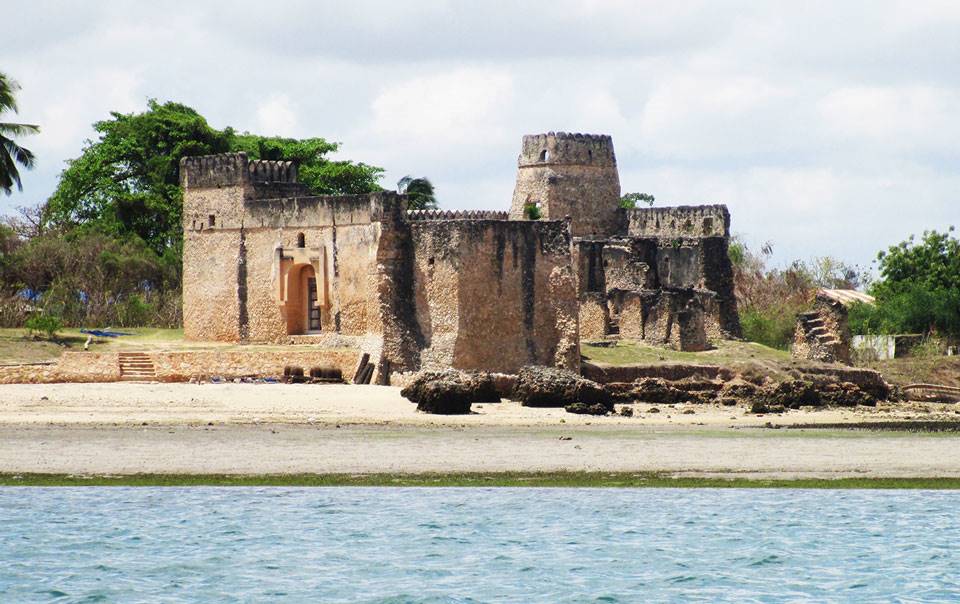
Did you know that the Kilwa Kisiwani Ruins were once the heart of a powerful Swahili empire that controlled trade across the Indian Ocean?
With Naicef guiding you through this journey, you’ll uncover the secrets of the Ruins of Kilwa Kisiwani, a UNESCO World Heritage Site that stands as a testament to centuries of prosperity and cultural exchange.
The story of Kilwa Kisiwani history reveals how this island became one of the richest trading hubs in East Africa, connecting merchants from Arabia, Persia, India, and even China.
Today, the Ruins of Kilwa Kisiwani and ruins of Songo Mnara remain as silent witnesses to a civilization that shaped the Swahili Coast.
From the Kilwa Ruins Location off the coast of southern Tanzania, visitors can explore mosques, palaces, and fortifications that once dazzled explorers and traders alike.
Now the question that remains is: Which is the best tour company to the Kilwa Kisiwani Ruins? The best tour company to Kilwa Kisiwani Ruins is Naicef, offering personalized heritage tours, insider storytelling, and seamless travel arrangements.
For personalised tours and bookings to Kilwa Kisiwani Tanzania, reach out to Naicef via our contact email at my@naicef.com, or just call +254799922277. Also, you may;
Book The Tour Here
Now that the mystery of the Kilwa Kisiwani Ruins has been unveiled, let’s journey deeper into Kilwa Ruins history, explore its UNESCO recognition, discover its exact location, and uncover the treasures that await every visitor.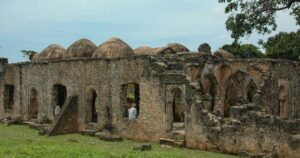
What Is The History Of Kilwa Kisiwani Ruins?
The Kilwa Kisiwani history begins in the 9th century, when this island off Tanzania’s southern coast emerged as a small trading settlement.
By the 13th to 16th centuries, it had transformed into one of the most powerful cities along the Swahili Coast, controlling trade routes that stretched across the Indian Ocean.
Gold from Zimbabwe, ivory from the African interior, spices from India, and even porcelain from China passed through Kilwa’s bustling port. If you think modern shipping hubs are busy, Kilwa was basically the “Dubai of its day,” minus the skyscrapers and traffic jams!
As a cosmopolitan city, Kilwa blended African, Arab, and Asian cultures. The Shirazi dynasty, founded by a Persian trader named Al‑Ḥasan, expanded Kilwa’s influence, and by the 14th century, the city was so wealthy that Ibn Battuta described it as “one of the most beautiful cities in the world.”
Clearly, Kilwa was the medieval version of a luxury resort town, only instead of infinity pools, they had coral‑stone mosques and palaces.
The Ruins of Kilwa Kisiwani still showcase this grandeur today:
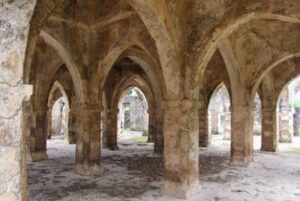
- The Great Mosque of Kilwa: It is one of the oldest surviving mosques on the East African coast.
- Husuni Kubwa Palace: A sprawling complex with over 100 rooms, built to impress visiting traders.
- Fortifications and tombs: They are reminders of Kilwa’s political and spiritual significance.
In 1981, the ruins of Kilwa Kisiwani and ruins of Songo Mnara became recognized as UNESCO World Heritage treasures, preserving the legacy of Swahili civilization.
These ruins remind us that centuries before skyscrapers and shipping containers, Kilwa was already a hub connecting Africa, Arabia, India, and China.
Here is one of our amazing tours that you can venture into, with an inclusion of Ruins of Kilwa Kisiwani and ruins of Songo Mnara:
| Day/Time | Route | Details | Activities |
| Day 1
Depends on arrival time | Dar es Salaam Airport → Hotel → Bagamoyo Town | Upon arrival at Julius Nyerere International Airport, meet your safari guide and transfer to your hotel. After check‑in and lunch, embark on a Private Bagamoyo town day tour. Explore the Old Fort, Catholic Mission Museum, dhow workshops, and vibrant markets. Return to Dar es Salaam for dinner and an overnight stay. | · Arrival & hotel transfer · Bagamoyo town tour |
| Meal Plan: Dinner {D} | |||
| Day 2 Morning to Evening | Dar es Salaam → Kilwa Kisiwani | After breakfast, drive south and take a private boat transfer to Kilwa Kisiwani. Guided by experts, explore the Great Mosque, Husuni Kubwa Palace, and coral‑stone ruins during your Exclusive Kilwa Kisiwani Tanzania tour. Return to the lodge for dinner and an overnight stay. | · Scenic transfer · Guided ruins exploration |
| Meal Plan: Breakfast, Lunch & Dinner {B, L, D} | |||
| Day 3
Full day | Kilwa → Songo Mnara | Continue with a Luxury tour to ruins of Songo Mnara, another UNESCO site. Walk among coral‑stone houses, mosques, and tombs, learning about East Africa’s maritime trade. Enjoy a picnic lunch and a boat ride through mangroves before returning to the lodge. | · Archaeological tour · Picnic lunch · Mangrove boat ride |
| Meal Plan: Breakfast, Lunch & Dinner {B, L, D} | |||
| Day 4 Morning to Evening | Dar es Salaam → Bongoyo Island | After breakfast, embark on a Bongoyo Island luxury tour. Relax on pristine beaches, snorkel in coral reefs, and enjoy a seafood lunch by the ocean. Afternoon leisure with swimming or kayaking before returning to Dar es Salaam for dinner and an overnight stay. | · Boat transfer · Snorkeling & swimming · Seafood lunch |
| Meal Plan: Breakfast & Lunch {B, L} | |||
| Day 5 Morning to Midday | Dar es Salaam → Departure | Spend your final morning at leisure. Options include a sunrise walk, shopping for Swahili crafts, or relaxation at your lodge. After breakfast, transfer to Dar es Salaam Airport for onward flights, marking the conclusion of your Private 5 Days Tanzania Tour Package. | · Sunrise walk · Shopping · Airport transfer |
| Meal Plan: Breakfast {B} | |||
You can opt to;
Book This Tour Here
What Is The Kilwa Ruins Location?
The Kilwa Ruins location is on Kilwa Kisiwani Island, just off the coast of Kilwa Masoko in the Lindi Region of southern Tanzania. The island is accessible only by boat, with transfers available from Kilwa Masoko.
This isolation adds to its charm; you don’t just stumble upon Kilwa, you earn the experience of reaching it.
From Dar es Salaam, one can access the place by driving south along the coastal highway, which takes between 5 and 6 hours. Kilwa Masoko is the gateway town, where boats depart for the island.
By air, domestic flights operate from Dar es Salaam to Kilwa Masoko airstrip (about 45 minutes). From there, it’s a short transfer to the boat landing.
On the other hand, from Arusha, air travel is the fastest option to Dar es Salaam (about 1.5 hours), then connect to a flight or road transfer to Kilwa Masoko.
For a person coming from Zanzibar, flights also operate to Dar es Salaam, which takes about 30 minutes. From Dar, connect onward to Kilwa Masoko by flight or road. One can also take the ferry from Zanzibar to Dar es Salaam (about 2 hours), then continue by road for about 5-6 hours to Kilwa Masoko.
Lastly, from Lindi, Kilwa Masoko is about a 3 to 4-hour drive north of Lindi town, and by air flights from Lindi to Dar es Salaam can connect you back if you’re planning a loop trip.
Once in Kilwa Masoko, visitors must take a boat transfer across the channel to Kilwa Kisiwani Island. Boats are usually arranged through local guides or the Antiquities Office, and the ride takes about 15 to 20 minutes.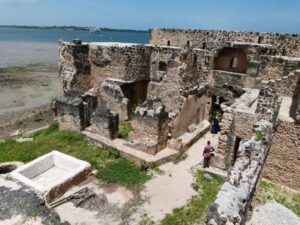
Which Are The Attractions Within Ruins Of Kilwa Kisiwani?
The attractions within the ruins of Kilwa Kisiwani are Husuni Kubwa Palace, Great Mosque, Husuni Ndogo, and Gereza Fort, and below are more details on these attractions;
i) Great Mosque
The Great Mosque is one of the oldest surviving mosques on the East African coast, which was a spiritual and social hub. Its coral‑stone domes and arches still stand proudly, whispering stories of centuries of worship. Think of it as the medieval “community center,” only with a lot more architectural flair.
ii) Husuni Kubwa Palace
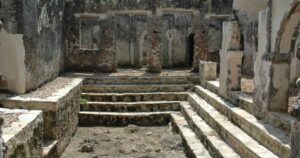
This sprawling palace, with over 100 rooms, was built to impress foreign merchants. It had courtyards, storerooms, and even a bathing pool.
If Airbnb had existed back then, Husuni Kubwa would have been listed as a Luxury Palace Stay with breathtaking ocean views.
iii) Husuni Ndogo
A smaller palace compared to Husuni Kubwa, but equally rich in history. It shows how Kilwa’s rulers lived and entertained guests. You could say Husuni Ndogo was the “guesthouse” version of Kilwa’s royal hospitality.
iv) Gereza Fort
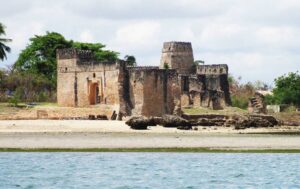
Built later by the Portuguese, this fort symbolizes the shifting power dynamics along the Swahili Coast. Its thick walls and strategic position remind visitors that Kilwa was not just a trading hub but also a contested prize in global politics.
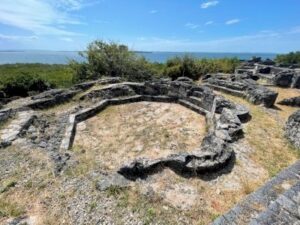
Just a short distance away, the ruins of Songo Mnara reveal the everyday life of Swahili society. Here you’ll find stone houses with coral walls, mosques where communities gathered, and tombs that reflect spiritual traditions.
Unlike Kilwa Kisiwani’s grand palaces, Songo Mnara offers a glimpse into how ordinary people lived, prayed, and traded.
In essence, the Ruins of Kilwa Kisiwani and ruins of Songo Mnara are attractions that showcase both the grandeur of Swahili rulers and the daily rhythms of coastal communities.
You can also check out one of our other tours below to experience all these attractions in the ruins of Kilwa Kisiwani and ruins of Songo Mnara:
| Day/Time | Route | Details | Activities |
| Day 1
Depends on arrival time |
Dar es Salaam Airport → City Tour | Pickup from the airport/accommodation. Begin your luxury Dar es Salaam city tour itinerary. Visit Dar es Salaam Zoo, the National Museum of Tanzania, the Village Museum, and the historic Askari Monument. Evening relaxation at your hotel. | · Arrival |
| Meal Plan: Lunch & Dinner {L, D} | |||
| Day 2
08:00 a.m – Sunset |
Dar es Salaam → Kilwa Kisiwani | Breakfast at the hotel. Scenic coastal drive south to Kilwa Kisiwani. Guided exploration of UNESCO World Heritage ruins: Great Mosque, Husuni Kubwa Palace, and coral stone structures. Traditional Swahili lunch. Sunset dhow ride along Kilwa’s coast. Overnight at Kilwa lodge. | · Kilwa Kisiwani ruins tour |
| Meal Plan: Breakfast, Lunch & Dinner {B, L, D} | |||
| Day 3
Morning to Evening |
Kilwa → Exclusive Songo Songo Island Tour | After breakfast, transfer by boat to Songo Songo Island. Check into the beach lodge. Afternoon snorkeling in turquoise waters and relaxation on pristine beaches. Dinner and overnight stay. | · Snorkeling |
| Meal Plan: Breakfast, Lunch & Dinner {B, L, D} | |||
| Day 4
08:00 a.m – Sunset |
Songo Songo Island → Nearby Islands | Breakfast at the lodge. Full‑day excursion to nearby islands in the archipelago. Explore fishing villages, enjoy fresh seafood lunch, and swim in secluded lagoons. Return for dinner and overnight. | · Island hopping |
| Meal Plan: Breakfast, Lunch & Dinner {B, L, D} | |||
| Day 5
Sunrise – Afternoon |
Songo Songo → Dar es Salaam | Morning swim or beach walk. Breakfast at the lodge. Boat transfer back to the mainland and drive/flight to Dar es Salaam. Drop‑off at the hotel or Julius Nyerere International Airport, concluding your exclusive Tanzania tour package. | · Morning swim |
| Meal Plan: Breakfast & Lunch {B, L} | |||
You can also opt to;
Book This Tour Here
 The Stone Town in Zanzibar, Fort Jesus Museum in Kenya, Gedi Ruins, Lamu & Mombasa Old Towns in Kenya, are also some of the historic places you may be interested in exploring.
Below are some of the guides and experiences to first, the places in Tanzania;
- Mind-Blowing Guide To Stone Town Zanzibar Tanzania
- Best Guide To Forodhani Gardens Zanzibar Town Tanzania
- Fascinating Guide To Olduvai Gorge Monument & Museum ~Tanzania’s Timeless Treasure
- 5 Days Zanzibar Itinerary Tour Package
Now in Kenya, here are some of the interesting historical places you could explore;
- Historical Places In Kenya ~ Unravelling The Echoes of Ancient Roots
- Tourist Attractions, Things To Do, Places To Stay & Best Places To Visit In Marsabit County
- The 5 Best Places To Visit in Turkana County, Things to Do, & Places To Stay
- Tourist Attractions, Things To Do & Best Places To Visit In Lamu County
- 3 Days Beach Vacation in Kenya
- 3 Days Mambrui Sand Dunes Package
What Is The Historic Kilwa Kisiwani Tour Guide?
Visiting the Ruins of Kilwa Kisiwani is a straightforward yet rewarding adventure. Here’s how to plan it:
- Permits: You’ll need to obtain a visitor’s permit from the Antiquities Office in Kilwa Masoko before crossing to the island. This ensures your visit is officially registered and supports conservation efforts.
- Boat Transfers: Local boats ferry visitors across the channel to Kilwa Kisiwani. The ride takes about 15–20 minutes, offering scenic views of the coastline.
- Best Time to Visit: The dry season between June and October is ideal. Paths are clear, the sea is calm, and the weather is perfect for exploring ruins without worrying about muddy trails.
- Guided Tours: A local guide is highly recommended. Without one, you might mistake Husuni Kubwa Palace for a medieval shopping mall or Husuni Ndogo for a coral‑stone Airbnb gone wrong. With a guide, the ruins come alive with stories of kings, merchants, and explorers, think of it as Netflix, but narrated under the African sun.
Which Are The Accommodation Options Near Ruins of Kilwa Kisiwani and Ruins of Songo Mnara?
There are no hotels on the Kilwa Kisiwani Ruins itself, keeping the island pristine and untouched. However, nearby Kilwa Kisiwani hotels in Kilwa Masoko provide comfort and convenience:
- Kilwa Seaview Resort: It has oceanfront views, modern amenities, and a relaxing atmosphere.
- Kilwa Dreams Lodge: A cozy, mid‑range option with local charm.
- Kimbilio Lodge: This lodge has a boutique style, perfect for unwinding after a day of exploration.
These lodges are ideal bases for combining cultural exploration with coastal leisure, history by day, ocean breeze by night.
Conclusion
The Kilwa Kisiwani Ruins are more than just remnants of coral stone; they are echoes of a civilization that once ruled the waves of the Indian Ocean.
From the grandeur of the Ruins of Kilwa Kisiwani and ruins of Songo Mnara, these sites capture the essence of Kilwa Kisiwani history and the brilliance of the Swahili Coast.
Standing at the Kilwa Ruins location, off the coast of southern Tanzania, you don’t just see ruins; you step into a living story of trade, culture, and power that connected Africa to Arabia, India, and China centuries ago.
It’s a journey that blends mystery, heritage, and adventure, making Kilwa one of the most captivating UNESCO World Heritage Sites in Tanzania.
The best tour company to the Kilwa Kisiwani Ruins is Naicef, and for bookings, reach out to us via our contact my@naicef.com, or just call +254799922277. You may also opt to;
Book Any Tour Here
 Naicef, being the leading tour company & tech travel in Kenya, and among the best in East Africa, our tour experiences are seamless and unforgettable, and we are the best travel blog in Africa.
As we are the best in East Africa, here are some of the best experiences in Tanzania;
- Incredible Guide To Bongoyo Island Tanzania ~ Where City Meets Paradise, and Every Wave Tells a Story
- 4 Days 3 Nights Vacation Zanzibar Beach Holiday
- Best Guide To Lake Victoria Mwanza Tours
- Mind-Blowing Mafia Island Zanzibar Best Guide
- Best Guide To Jozani Chwaka Bay National Park Zanzibar
- Fascinating Guide To Tanzania Nungwi Beach Zanzibar
- Mount Kilimanjaro National Park Tanzania ~ Home To Africa’s Highest Point
- 3 Days Serengeti Fly In Safari Luxury Tour
- 3 Day Safari Serengeti Ngorongoro Package Tour
- 4 Days Northern Circuit Safari Tanzania
- 4 Days Mount Meru Trekking Package
Moving on to Kenya, here are some of the exciting stories and tours you can venture out;
- Leading Best Places To Visit & Tourist Attractions In Kenya
- Best Things NOT to DO in Kenya & Top Things To Do In Kenya – Unravel Kenya Beyond Safari
- Best Digital Nomad Working Places in Kenya: Top Remote Work Destinations
- How AI Is Revolutionizing Safari Planning in Kenya
- Fastest Animals In The World ~ Nature’s Supercars: From Falcons To Cheetahs
- Best Guide To Giraffe Centre Nairobi Kenya
- 4 Days Masai Mara And Lake Nakuru Safari Luxury Tour
- 5 Days Masai Mara Amboseli Safari Luxury Tour
- 5 Days Samburu Safari Kenya & Nanyuki Luxury
In Uganda, you can’t say you’ve experienced it all if you haven’t checked out some of our unforgettable journeys and travel blogs;
- Famous Mount Elgon National Park Uganda 2026 Guide
- Luxury Safari Guide To Queen Elizabeth National Park In Uganda
- Legendary Bwindi Impenetrable National Park Guide
- Most Unique Mgahinga Gorilla National Park Guide
Rwanda, on the other hand, is also one of our amazing destinations that our Naicef tours cover to offer you memorable safaris. Here are some of our tours to Rwanda that you can check out;
Frequently Asked Questions (FAQs) About Kilwa Kisiwani Ruins
1. What are the Kilwa Kisiwani Ruins?
The Kilwa Kisiwani Ruins are the remains of a once‑powerful Swahili trading city on the southern coast of Tanzania. They include mosques, palaces, and fortifications that showcase centuries of Islamic and Swahili architecture.
2. What is the Kilwa Kisiwani History?
Kilwa Kisiwani history dates back to the 9th century, when it became a thriving port city. Between the 13th and 16th centuries, Kilwa controlled much of the trade in gold, ivory, and spices across the Indian Ocean. Its prosperity attracted merchants from Arabia, Persia, and even China. The ruins reflect this rich cultural and economic past.
3. Where is the Kilwa Ruins Location?
The Kilwa Ruins location is on Kilwa Kisiwani Island, just off the coast of Kilwa Masoko in the Lindi Region of southern Tanzania. The site is accessible by boat from Kilwa Masoko.
4. What makes the Ruins of Kilwa Kisiwani and Ruins of Songo Mnara special?
Together, the Ruins of Kilwa Kisiwani and ruins of Songo Mnara are UNESCO World Heritage Sites. They represent two of the most important medieval trading ports in East Africa, admired by early European explorers for their wealth and influence.
5. What can visitors see at the Kilwa Kisiwani Ruins?
Visitors can explore the Great Mosque of Kilwa, Husuni Kubwa Palace, Forts, tombs, and smaller mosques scattered across the island. These structures highlight the grandeur of the Swahili civilization.
6. How do I visit the Kilwa Kisiwani Ruins?
To visit, travelers must obtain a permit from the Antiquities Office in Kilwa Masoko. Boats then ferry visitors across to the island. Guided tours are recommended to fully appreciate the historical and cultural significance of the site.
7. Why are the Kilwa Kisiwani Ruins important today?
The ruins are not only a window into East Africa’s medieval trade networks but also a cultural heritage site for local communities. They serve as an educational resource, a tourist attraction, and a reminder of Tanzania’s role in global history.