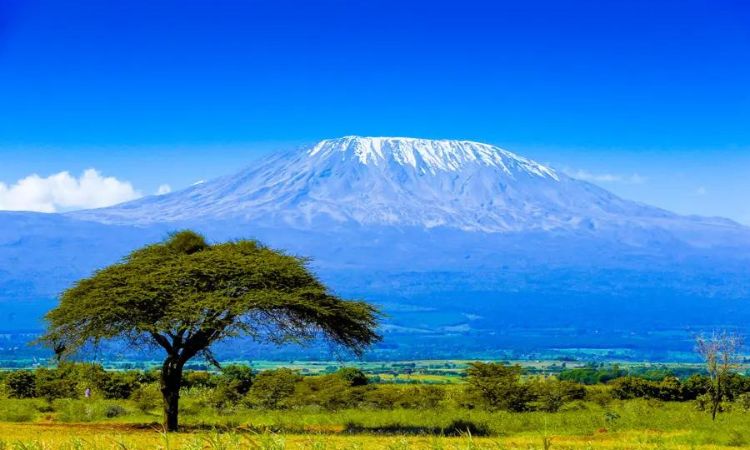
Did you know that Mount Kilimanjaro National Park Tanzania, is more than being home to Africa’s tallest mountain?
In this amazing guide by Naicef, get to uncover various amazing things, such as Mount Kilimanjaro height, Mount Kilimanjaro National Park activities, among others.
I know the question many ask is, where is Mount Kilimanjaro, and what makes it so irresistible to climbers from around the world. This guide reveals it all, from the history to the best routes, insider trekking tips, and even a complete Kilimanjaro packing list, so stick along.
To book a Mount Kilimanjaro National Park safari, reach out to Naicef via our contact email at my@naicef.com or simply call:+254799922277. You may also choose to;
Book A Climbing Kilimanjaro Tour Here
Here are now the amazing facts about Mount Kilimanjaro National Park that will make you smile while learning!
What Are The Interesting Fact About Mount Kilimanjaro National Park Tanzania?
Here are the interesting facts about Mount Kilimanjaro National Park Tanzania:
If mountains had Instagram accounts, Mount Kilimanjaro would be verified with millions of followers. Why?
Because it’s not just tall, it’s the tallest free‑standing mountain in the world, standing at a jaw‑dropping 5,895 meters (19,341 ft). That’s like stacking 19 Eiffel Towers on top of each other. Imagine climbing that without an elevator!
Did you know that the first recorded successful climb was in 1889 by Hans Meyer (a German geographer) and Ludwig Purtscheller (an Austrian mountaineer)? If those guys had Instagram back then, their summit selfie would have broken the internet.
Also, did you know that Kilimanjaro isn’t just one mountain, it’s actually three volcanic cones. They include Kibo, which is the big boss, still dormant but not extinct; Mawenzi, which is normally rugged, dramatic, and perfect for those “don’t mess with me” photos.
The last one is now Shira, which is the oldest cone, now collapsed, but still part of the family. Think of them as the mountain’s three siblings: one calm, one wild, and one retired.
On the other hand, Mount Kilimanjaro National Park Tanzania, isn’t just about the mountain, as it is home to over 140 bird species and animals like Elephants, Leopards, and Colobus monkeys.
Imagine spotting a leopard while you’re catching your breath, talk about motivation to keep moving!
And here’s a fun thought: Elephants sometimes wander near the lower slopes. They don’t climb, of course (can you picture an elephant in hiking boots?) but they remind you that Kilimanjaro is as much about wildlife as it is about altitude.
They say climbing Kilimanjaro is tough. True. But the real challenge? Explaining to your friends back home that you climbed Africa’s tallest mountain… and still didn’t lose weight.
Continue reading as we unravel more of what Mount Kilimanjaro National Park has in store for you as you plan to visit with Naicef.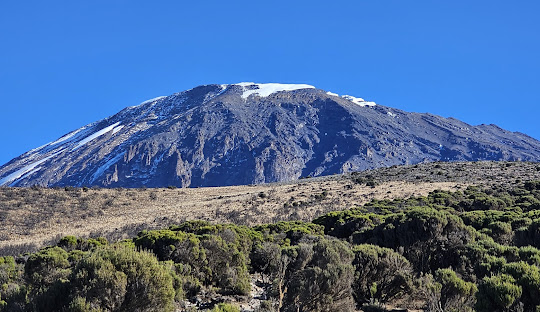
Do You Know The History of Kilimanjaro National Park?
If Kilimanjaro could talk, it would probably say: “I’ve seen it all,” as it has been part of human history for centuries.
Originally, the slopes of Kilimanjaro were declared a forest reserve in 1921, but in 1973, Tanzania decided this mountain deserved more than just a “forest” title. It became Mount Kilimanjaro National Park, protecting not only the forests but also the summit itself.
In 1987, UNESCO stepped in and said, “Yep, this place is world‑class,” and so it became a UNESCO World Heritage Site.
Where Is Mount Kilimanjaro?
Mount Kilimanjaro proudly stands near the Kenyan border, inside Mount Kilimanjaro National Park Tanzania, and it’s the kind of landmark you can spot from miles away.
Imagine driving and suddenly seeing a snow‑capped peak rising above the savannah. It’s like nature saying, “Ta‑da!”
The phrase “Mount Kilimanjaro Kenya or Tanzania” usually comes up because people are sometimes confused about which country the mountain actually belongs to. The mountain sits in northern Tanzania, just south of the border with Kenya, making it very close to the Kenya–Tanzania border.
It’s roughly 45 km from Moshi and about 300 km south of Nairobi in Kenya, but people on a safari in Amboseli National Park, Kajiado County, can see the amazing views of this majestic mountain.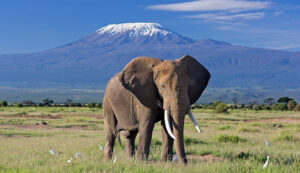 Getting to Kilimanjaro isn’t as complicated as climbing it. You’ve got three main gateways:
- Arusha – the safari capital of Tanzania, where most adventurers gather before heading out.
- Moshi – the closest town to Kilimanjaro, often called the “base camp city.” It’s full of coffee shops, trekking gear rentals, and climbers nervously sipping lattes before their big hike.
- Kilimanjaro International Airport (JRO) – yes, the mountain has its own airport nearby. You can literally land, look out the window, and say, “Yep, that’s the one I’m climbing.”
What Are The Mount Kilimanjaro National Park Activities?
Here is a breakdown of Mount Kilimanjaro National Park activities, which range from hiking to scenic wildlife sightings, among others:
1. Trekking Mount Kilimanjaro
Being one of the main Mount Kilimanjaro National Park activities, people visit the park to climb Mount Kilimanjaro using various routes, such as Lemosho, Rongai, or even Machame. The trek usually ranges from 5 to 9 days.
2. Light Scenic Hikes
Not everyone wants to hike upto the summit of Mt.Kilimanjaro, and that’s why the park allows short hikes around the lower slopes, making it perfect for families or those who seek to just have a glimpse of the park.
3. Wildlife Sighting & Birdwatching
The park is also home to over 140 different bird species and various wild species such as Elephants, making it an ideal place for wildlife views.
See also our amazing guide on Birdwatching Places In Kenya, and even tours that you could take to see a wide array of wild species in Kenya & Tanzania:
- 3 Day Safari Serengeti Ngorongoro Package Tour
- 3 Days Serengeti Fly In Safari Luxury Tour
- 3 Days Nakuru Bird Watching in Kenya Safari
- 3 Days Masai Mara luxury safari
- 3 Days Samburu Safari Luxury Tour
4. Cultural Immersion
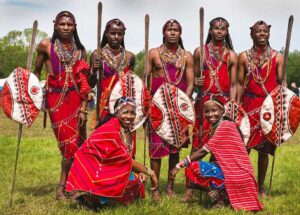
Besides wildlife sighting and trekking on Mt.Kilimanjaro, cultural tours with the Chagga people are also one of the exciting Mount Kilimanjaro National Park activities. Get to visit the local villages and learn about their traditions, such as farming methods, foods, and stories.
See also some of our amazing cultural experiences that involve authentic immersions in other cultures:
- 3 Days Masai Mara Cultural Package
- 3 Days 2 Nights Aberdares Cultural Tour
- 3 Days Samburu Cultural Tour
- 3 Days Western Kenya Cultural Tour Package
- 4 Days Wewo Catholic Church Self Drive
- 6-Day Self-Drive Kenya To Koobi Fora
- 5 Days Lake Logipi Self-Drive Safari Tour Package
- Mombasa 5 Days Cultural Package
 In addition to the cultural experience, you can have an add-on tour to the coffee farms in Moshi. Here are also some of our amazing places to experience tea & coffee tours in Kenya:
- Coffee Farm Tours In Kenya ~ Beyond the Bean: Experience Kenya’s Coffee Story
- Tea Farm Tours In Kenya ~ From Bush To Brew: A Journey Worth Sipping, It’s Tea Time
- Half-Day Gathoni Park Tea Farm Tour Package
5. Visit Hot Springs (Kikuletwa)
After trekking Mount Kilimanjaro, visit the natural geothermal pools of Kikuletwa, which are normally warm and soothing.
Mount Kilimanjaro Height & Peaks
Being the roof of Africa, Mount Kilimanjaro height is 5,895 meters (19,341 ft) above sea level. It’s the tallest free‑standing mountain in the world, meaning it rises all on its own, not part of a mountain range.
The Mount Kilimanjaro peaks are usually three, which are Kibo, Mawenzi, and Shira.
Kibo is the ultimate peak or the boss peak, and being a Dormant volcano, it hasn’t erupted in thousands of years. Uhuru Peak on Kibo is the ultimate goal for climbers, offering sunrise views that make all the exhaustion worth it.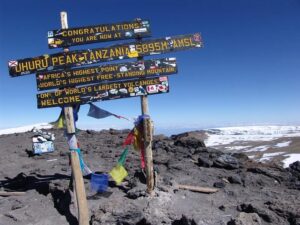 Mawenzi, on the other hand, is the wild peak at a height of 5,149 m and is normally rugged and dramatic, making it only favourable for experienced mountaineers. It is the third-highest peak in Africa after Kibo, being the first, and the snow-capped Mount Kenya in Kenya, being the second.
Lastly, Shira, the retired peak, stands tall at a height of 4,005 m, and it is the oldest of the three volcanic cones. It collapsed thousands of years ago, leaving behind the Shira Plateau, making it a perfect location for photography and wildlife viewing.
What Is The Ultimate Guide To Climb Mount Kilimanjaro?
Climbing Mount Kilimanjaro isn’t about ropes or even maybe ice axes like in “Game Of Thrones”; it’s about stamina, patience, and knowing when to slow down. Here is now an ultimate guide on how to conquer the majestic Mount Kilimanjaro height;
(i) Duration & Daily Routine
- Average trek: 5 to 9 days, depending on the route you choose. Think of it as a week‑long adventure where every day feels like a new episode of “Survivor: Kilimanjaro Edition.”
- Daily trekking: 4 to 7 hours of steady walking. Not too fast, not too slow, just the perfect pace.
- Summit night: Brace yourself for 10 to 12 hours of trekking, starting at midnight. It’s cold, it’s dark, and it’s the moment you’ll question all your life choices. But when the sun rises over Uhuru Peak, you’ll forget the pain and remember the glory.
(ii) Guides & Porters
- Porters and guides are usually mandatory and essential. These heroes carry your gear, cook your meals, and sometimes even sing motivational songs when you look like you’re about to quit.
- Guides also provide medical checks along the way, monitoring oxygen levels and making sure altitude sickness doesn’t sneak up on you.
So when you plan to trek up Mount Kilimanjaro height, be sure to have these amazing heroes to help you, because you will surely need them.
(iii) Altitude & Acclimatization
- The biggest challenge is usually not the climb but the altitude itself.
- Some of the prevention tips are to go slow, hydrate like crazy, and take rest days seriously.
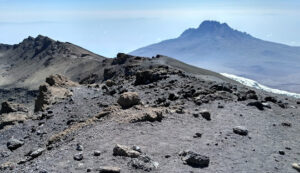
Kilimanjaro Routes Compared (Machame vs Lemosho vs Rongai vs Marangu vs Northern Circuit)
Choosing the right route up Mount Kilimanjaro height is like picking your adventure style. Do you want the most scenic path, the fastest climb, or the one with the best success rate?
Each trail has its own personality, from the popular Machame to the remote Rongai and the epic Northern Circuit. To help you decide, here’s a quick comparison of the main routes, highlighting duration, difficulty, scenery, and who they’re best suited for.
| Route | Duration | Difficulty | Scenery | Success Rate | Best For |
| Machame | 6–7 days | Moderate | Diverse, scenic | ~85% | Popular choice, varied terrain |
| Lemosho | 7–8 days | Moderate | Most scenic | ~90% | Photographers, acclimatization |
| Rongai | 6–7 days | Easier | Remote, less crowded | ~80% | Beginners, solitude |
| Marangu | 5–6 days | Easier | Hut accommodation | ~70% | Budget travelers |
| Northern Circuit | 9 days | Challenging | Panoramic views | ~95% | Best acclimatization |
Here is one of our amazing hiking tours to Mount Kilimanjaro, using the Lemosho route:
| Day | Route / Camp | Key Highlights | Difficulty |
| Day 1 | Arusha/Moshi → Londorossi Gate → Big Tree Camp (2780m) | Start trek through rainforest, spot Colobus monkeys, and overnight at Big Tree Camp. | Easy (+530m) |
| Day 2 | Big Tree Camp → Shira Camp 1 (3500m) | Enter moorland, see lobelias & ericas, views of Shira Plateau & Kibo Peak. | Moderate (+720m) |
| Day 3 | Shira Camp 1 → Shira Camp 2 (3900m) | Cross Shira Ridge, flatter terrain, views of the Rift Valley & Mount Meru. | Easy (+400m) |
| Day 4 | Shira Camp 2 → Lava Tower (4640m) → Barranco Camp (3960m) | Acclimatization day, climb high to Lava Tower, then descend to Barranco Camp. | Challenging (+740m / ‑680m) |
| Day 5 | Barranco Camp → Karanga Camp (4035m) | Climb Barranco Wall, pass “Kissing Rock,” last water point before summit. | Moderate (+75m) |
| Day 6 | Karanga Camp → Barafu Camp (4640m) | Trek through the alpine desert, dramatic Mawenzi views, and prepare for summit night. | Moderate (+605m) |
| Day 7 | Barafu Camp → Uhuru Peak (5895m) → Mweka Camp (3080m) | Midnight summit push, reach Africa’s highest point, descend to Mweka Camp. | Very Strenuous (+1255m / ‑2815m) |
| Day 8 | Mweka Camp → Mweka Gate (1630m) → Arusha/Moshi | Final rainforest descent, receive summit certificate, transfer back to the hotel. | Easy (‑1450m) |
You can;
Book This Tour Here
How To Prepare To Climb Mount Kilimanjaro
If in need of climbing Mt.Kilimanjaro in Mount Kilimanjaro National Park Tanzania, here are some tips on how to better be prepared for this ultimate trek:
- Cardio: Running, cycling, swimming. Basically, anything that makes you sweat and gasp for air.
- Strength training: Focus on legs and core. Squats should be your new best friend.
- Practice hikes: Carry a weighted backpack. Bonus points if you fill it with snacks, it will be a motivation guaranteed.
- Mental prep: Remember, it’s not just your body climbing, it’s your mind too. If you can survive Monday mornings, you can survive Kilimanjaro.
What Is Needed On A Kilimanjaro Packing List?
After going through Mount Kilimanjaro height, the ultimate guide to climb, the routings, and the preparation tips, I think now the only thing left is to pack and get to book with Naicef. Here is now all you need to buckle up for this not-easy-to-go but worth it quest:
- Clothing: Wear layers. Start with a light shirt (base), add a warm sweater (mid), and finish with a jacket (outer shell).
- Gear: Trekking poles (your knees will thank you), headlamp (because summit night is pitch black), hydration pack (staying hydrated is the secret to surviving altitude).
- Personal items: Sunscreen (yes, you can get sunburned while freezing), snacks (such as chocolate), and medications (plus basics like painkillers).
- Documents: Passport, permits, insurance.
When Is The Best Time To Climb Mount Kilimanjaro?
The best time to climb Mount Kilimanjaro for an ultimate experience is as follows:
- Dry seasons: From January to March and June to October. Clear skies, great views, fewer tears.
- Avoid April to May: Heavy rains. Unless you enjoy mud wrestling with your boots.
- December: Festive climbs with colder nights. Imagine celebrating New Year’s Eve at 5,895 meters. Champagne might freeze, but the view is unbeatable.
Which Are The Best Hotels and Accommodations Near Mount Kilimanjaro?
The best accommodation options that are close to Mount Kilimanjaro National Park Tanzania:
1. Kaliwa Lodge
This luxury lodge is nestled on the edge of Mount Kilimanjaro National Park, offering breathtaking views of both Mt.Kilimanjaro and Mt.Meru. It entails modern, stylish rooms with hot showers, comfy beds, and private balconies, making it ideal for travelers who want adventure by day and luxury by night.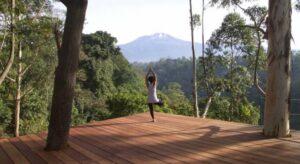
2. Kilimanjaro Mountain Resort
Situated in Marangu, Kilimanjaro Mountain Resort is close to the starting point of the Marangu Route. It offers spacious rooms, a swimming pool, and landscaped gardens, giving it a true “resort feel.”
3. Moshi Town Guesthouses
Many guesthouses can be found in Moshi town, where their rooms are simple but comfortable, often with Wi‑Fi and hot showers.
You will be surprised to hear that most of these guesthouses also arrange trekking logistics, transfers, and cultural tours. This thus means that it is a popular place with climbers, so you’ll get to meet fellow adventurers swapping stories over breakfast.
4. Camping Sites
These camping sites are usually ideal for budget travelers who would want the “rough and tough” vibe and don’t mind trading comfort for adventure.
Most of these sites are situated near trailheads or within the park, and they do include basic facilities such as tents, shared bathrooms, and sometimes even communal kitchens.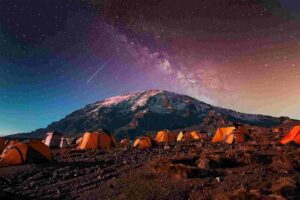
5. Marangu Huts
These are just simple wooden huts with bunk beds, communal dining halls, and shared bathrooms that are found along the Marangu Route (the “Coca‑Cola Route”).
They are affordable and practical, especially for trekkers who prefer huts over tents as they hike up the mountain. Think of it as a mountain Airbnb, haha!
Are you planning to spend nights at any of these accommodation options? Consider Naicef as your No.1 travel partner.
Conclusion
Standing tall at Mount Kilimanjaro height of 5,895 meters (19,341 ft), this majestic giant is more than just Africa’s highest peak; it’s a living storybook of nature, culture, and adventure.
From its fascinating history, Mount Kilimanjaro National Park offers travelers an experience that blends challenge with wonder.
For anyone wondering where is Mount Kilimanjaro, the answer is simple yet captivating: it rises proudly in Mount Kilimanjaro National Park Tanzania, near the Kenyan border. It is visible from miles and draws explorers from across the globe.
Beyond the climb, the variety of Mount Kilimanjaro National Park Activities makes the journey even richer, from birdwatching and cultural tours to coffee plantation visits, among others.
So, are you ready to turn this dream into reality? Book a trip to Kilimanjaro today, or for a personalized experience tailored to your style, contact Naicef via our email at my@naicef.com or call:+254799922277.
Also, you can;
Book A Climbing Tour Here
Why Naicef? It is because we don’t just plan trips, we craft immersive journeys, and with expert knowledge of East Africa and a passion for storytelling, we ensure your Kilimanjaro adventure is seamless, memorable, and truly one‑of‑a‑kind. Here are also some of our adventurous experiences that you could also check out, and even a guide on the Best Hiking Trails & Places In Kenya:
- Ultimate Ngong Hills Package
- 1 Day Mt. Longonot Hike
- Mt Kenya 1 Day Hike Package
- Full Day Ol Donyo Hiking & Fourteen Falls Thika
- 1 Day Forest Challenge Package – Fun & Thrill
- Sky Cycling Kenya 1Day Package
- 3-Day Aberdare National Park Safari
- 4 Days Western Kenya Wildlife Safari
- 4- Days Kakamega Forest National Reserve Package
- 4 Days Rock Climbing Package
- 5-Day Mt Elgon Tour Package
Frequently Asked Questions About Mount Kilimanjaro National Park
1. Where is Mount Kilimanjaro?
Mount Kilimanjaro is in Northern Tanzania, near Moshi, close to the Kenyan border.
2. What is Mount Kilimanjaro height?
The free-standing mountain is 5,895 meters (19,341 ft).
3. Which is the best route to climb?
Lemosho for scenery, Machame for popularity, Northern Circuit for acclimatization.
4. Do I need prior climbing experience?
No technical skills required, but fitness and preparation are essential.
5. What else can I do besides climbing?
Wildlife spotting, cultural tours, coffee experiences, hot springs, and safaris.